


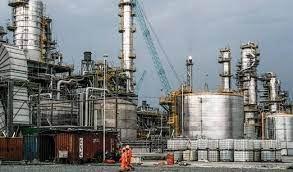
Dangote Petroleum Refinery has dismissed media reports claiming it has shut down operations for maintenance, describing the reports as false and misleading.

In a statement issued on Monday, the refinery said production remains stable, ongoing and uninterrupted, assuring the market of a sustained supply of Premium Motor Spirit (PMS).
The refinery disclosed that it has the capacity to supply 40 million to 50 million litres of PMS daily through January and February, depending solely on market demand. It added that on January 4, it produced 50 million litres of petrol and evacuated 48 million litres through its gantry.
According to the company, current stock levels are sufficient to meet over 20 days of national consumption, effectively dispelling fears of supply disruptions.
Addressing claims that routine maintenance had triggered a shutdown, Dangote Refinery clarified that maintenance on specific units does not halt overall production due to the facility’s integrated design.
It explained that while units such as the Crude Distillation Unit (CDU) or Residual Fluid Catalytic Cracking (RFCC) may undergo maintenance, other critical units—including the Naphtha Hydrotreater, Continuous Catalyst Regeneration (CCR) Reformer, and Hydrocracker—remain operational, producing petrol, diesel and Jet A-1.
The refinery said it has consistently supplied the domestic market, loading between 31 million and 48 million litres of PMS daily since December 16, 2025, in line with demand. It noted that these figures are verifiable through depot loading records maintained by the Nigerian Midstream and Downstream Petroleum Regulatory Authority (NMDPRA).
Dangote Refinery also reaffirmed that it continues to sell petrol at an ex-gantry price of N699 per litre to marketers and bulk buyers, urging operators to patronise locally refined fuel rather than imported products.
The company accused fuel importers of sponsoring false reports to justify recent increases in pump prices, warning that such actions impose additional hardship on Nigerians. It argued that without domestic refining, petrol prices could rise to as much as N1,400 per litre in a post-subsidy environment.
Reiterating its commitment to energy security and market stability, the refinery urged the public to disregard misinformation and rely on verified sources, stressing that routine maintenance is managed in line with global standards and does not disrupt supply.

