
By Elvis Eromosele

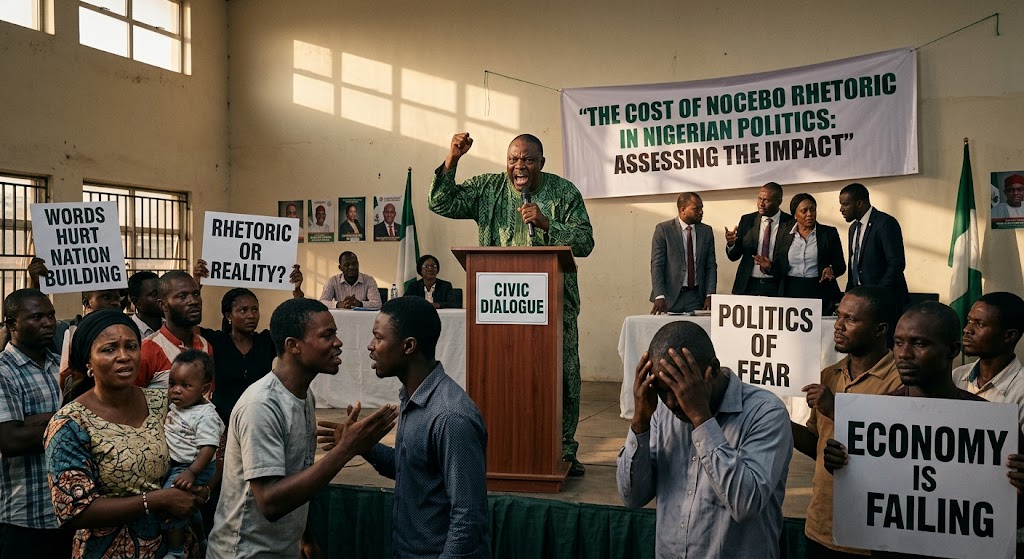
There is a curious dynamic in Nigeria. Often, before the government fully implements a new policy, citizens are already suffering its psychological and economic consequences. Before a new tax takes effect, families calculate how much poorer they will become. Before an electricity tariff hike is finalised, households brace for darkness. Before an economic reform lands, traders hike prices, transport operators raise fares, and families cut back on meals.
The policy may be fresh, and promised benefits may still lie on the horizon, yet the pain has already arrived. Welcome to nocebo politics.
In medicine, the nocebo effect occurs when negative expectations cause real physical symptoms or worsen an illness. This is the opposite of the placebo effect. Transferred to politics, the concept describes what happens when years of broken promises, policy reversals, and poor communication condition citizens to expect the absolute worst from their government.
This is not to suggest Nigeria’s economic hardships are imaginary. Inflation, insecurity, unemployment, and declining purchasing power are brutally real. However, negative political expectations amplify these difficulties, reshaping behaviours and eroding faith in the future.
Consider a typical Nigerian household. A wage earner’s salary barely covers rent, food, transport, and school fees, while a spouse’s small business is squeezed by rising energy costs.
Then comes another government announcement, perhaps regarding taxation, fuel pricing, or foreign exchange reform. Officials frame the measure as essential for long-term prosperity. The household hears something very different: another reason to panic.
Parents anticipate higher expenses. Suppliers raise prices expecting steeper transport costs. Landlords consider rent hikes. Business owners freeze hiring. Long before every anticipated cost materialises, negative expectations drive decision-making.
When government officials insist the economy is turning a corner, citizens hear an advertisement for a product they have bought before and found broken. Trust, once depleted, becomes an expensive commodity.
Nigeria’s political system suffers from a severe credibility deficit. Successive administrations have promised economic transformation, steady power, affordable food, and quality healthcare. While genuine policy interventions exist, the gulf between official pledges and daily reality remains vast.
Consequently, new announcements are never received in a vacuum; they are filtered through accumulated national trauma. A pledge of lower prices is judged against the cost of the next market trip. A promise of job creation is measured against unemployed graduates on the street.
Sceptical public reactions may seem cynical, but they are rational. Citizens learn from experience. When public institutions repeatedly disappoint, scepticism becomes self-protection.
The danger is that entrenched scepticism renders even well-meaning reforms DOA. Good news is dismissed as propaganda, while every setback is taken as confirmation that nothing will ever improve.
Economic hardship is not just measured in macroeconomic statistics; it is experienced as anxiety and the inability to plan.
A business owner unable to predict energy or forex costs delays expansion. An investor doubting policy consistency holds back capital. A family uncertain about future income cuts back on non-essential spending. Individually, these choices are logical. Collectively, they suppress consumption, reduce investment, and deepen the economic slowdown.
Nigeria’s leaders must realise that public confidence is not a luxury; it is a core economic engine. Yet confidence cannot be manufactured through political slogans. Telling Nigerians the economy is improving while their purchasing power shrinks will NOT restore trust.
People can endure temporary sacrifice if they understand its purpose, see the burden shared fairly, and witness tangible progress. They resist sacrifice when it appears permanent, and the benefits remain abstract.
The truth is that words matter. Nocebo politics also breeds political resignation. When citizens conclude that their votes do not matter or that government programmes exist primarily for elite advantage, civic participation gives way to apathy. Some withdraw from public affairs entirely, while others become susceptible to populist political manipulation.
Rebuilding public faith requires a shift from political communication to measurable performance.
One is clear communication. Officials must explain policies in simple language, outlining immediate costs, long-term targets, relief measures, and timetables.
Secondly, there must be verifiable milestones. So, promises must be tied to clear indicators. If a reform fails to meet its goals, leaders should explain why and adjust course transparently.
In addition, there must be shared sacrifice. This means that leaders must demonstrate austerity in government. Citizens will not accept calls for patience while witnessing political waste and extravagance.
Nigeria does not need leaders who promise that everything will be fine. It needs leaders who acknowledge hardship, demonstrate empathy, and show verifiable evidence that their decisions are yielding results.
Citizens, too, must maintain healthy vigilance without slipping into total cynicism, which can become its own trap.
A government, in truth, cannot control every global shock or market disruption. It can, however, control its transparency, policy consistency, and accountability. Ultimately, Nigeria’s task is not to persuade people to believe in a better future, but to create conditions where believing in that future is rational.
The lesson for leaders is straightforward: stop asking citizens to trust promises. Give them reasons to trust performance.
Eromosele, a corporate communications expert, sustainability advocate, and Lead Coordinator for the Africa Sustainability Forum 2026, writes via elviseroms@gmail.com.