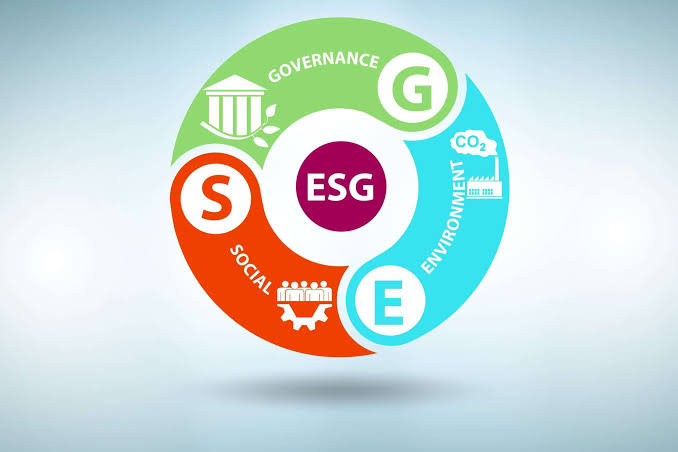
Africa’s sustainability debate is entering a more consequential phase. What was once largely treated as a corporate social responsibility issue or an exercise in regulatory compliance is increasingly influencing investment decisions, access to finance, business competitiveness and long-term corporate survival.

For African businesses, the question is no longer whether to embrace environmental, social and governance (ESG) principles. It is how to make them work in an economic environment characterised by infrastructure deficits, energy poverty, unemployment, climate vulnerability and competing development priorities.
This was the central argument at the African Boardroom Exchange, organised by Ascent Club in partnership with BusinessDay Nigeria on November 27, 2026. Under the theme, Africa’s ESG Imperative: Boardroom Leadership for Sustainable Growth, business leaders and sustainability professionals examined the responsibility of corporate boards in shaping a transition that delivers both economic prosperity and environmental progress.
The conversation exposed a fundamental tension in Africa’s development ambitions: how can a continent that still needs more electricity, industrial capacity, jobs and investment meet increasingly demanding global sustainability expectations without undermining its own growth prospects?
The answer, according to the speakers, lies in moving beyond imported templates, treating sustainability as a strategic business consideration and giving African boards a more active role in determining the continent’s development pathway.
The business case for ESG is changing. Investors increasingly want to understand not only how much a company earns but also how it manages climate risks, treats its workforce, engages communities, governs its operations and prepares for emerging environmental and regulatory pressures.
For companies seeking international capital, participating in global supply chains or attracting development finance, sustainability performance is becoming an important part of the investment conversation.
This shift has particular implications for Nigeria. The Securities and Exchange Commission, in September 2026, directed public companies and significant public-interest capital market operators to prepare for the adoption of the International Financial Reporting Standards (IFRS) Sustainability Disclosure Standards.
The standards, IFRS S1 and IFRS S2, establish requirements for reporting sustainability-related financial information and climate-related risks and opportunities. Under Nigeria’s implementation roadmap, mandatory reporting for public interest entities begins with accounting periods starting on or after January 1, 2028.
The implications extend beyond producing another corporate report. Businesses must establish appropriate governance arrangements, improve data collection, strengthen internal controls, train personnel and ensure that boards understand the financial implications of sustainability risks.
In practical terms, ESG is moving closer to the heart of corporate strategy, financial reporting and risk management. For Nigerian companies, this transition presents both a compliance challenge and an opportunity to improve the quality of corporate decision-making.
Perhaps nowhere is the tension between development and sustainability more visible than in the energy sector. Africa has significant natural resources and enormous renewable energy potential, yet millions of people still lack reliable electricity. Industrialisation remains constrained by inadequate power supply, while businesses and households continue to bear the cost of unreliable energy.
Against this background, the expectation that African countries should rapidly decarbonise their economies raises difficult questions about affordability, energy access and economic competitiveness.
At the Boardroom Exchange, Grace Osita-Ambadi, General Manager, Partner Relations at Seplat Energy Plc, argued that energy security and decarbonisation should not be treated as mutually exclusive objectives.
Africa, she maintained, must pursue both through realistic energy transition pathways that recognise its population growth, industrialisation needs and economic circumstances. Her argument challenges the simplistic framing of the energy transition as an immediate choice between fossil fuels and renewable energy.
For Nigeria, crude oil and natural gas remain significant economic resources. The more immediate challenge is to improve how these resources are produced, processed and utilised while reducing their environmental impact.
Osita-Ambadi highlighted the need to harness Nigeria’s substantial natural gas reserves, expand gas processing infrastructure and reduce routine flaring. She cited the Assa North-Ohaji South gas development project in Imo State, which commenced production in January 2026 and has a processing capacity of 300 million standard cubic feet per day. The project, she said, is supplying the domestic market and Indorama Petrochemicals.
She also pointed to Seplat’s reported achievement of zero non-routine gas flaring in its onshore assets, alongside its methane leak detection and repair systems. These interventions illustrate an important point: sustainability in Africa’s energy industry must involve improving the environmental performance of existing operations while expanding access to cleaner and more reliable energy.
The transition must also embrace renewable energy. Osita-Ambadi cited a Seplat partnership with the Edo State Government to develop a mini-solar grid in Olobo, serving 138 households and small businesses. She further highlighted a tree-planting initiative that has grown beyond 500,000 trees, providing environmental benefits alongside opportunities for local participation and economic empowerment.
The larger business lesson is that energy transition should be measured not only by emissions reduced but also by electricity delivered, jobs created, businesses supported and communities reached.
Another important dimension of Africa’s ESG challenge is the application of international sustainability standards to local operating environments.
Karen Graciga, an ESG and social performance leader with more than 20 years of experience across Africa and Europe, acknowledged the value of international ESG frameworks but cautioned that they do not always adequately reflect the realities of African markets.
Her experience in West African mining operations and engagement with international lenders has shown how difficult it can be to reconcile global standards with national laws, customary practices and local expectations.
Land access provides a practical example. A mining company operating in West Africa may need to comply with national land legislation, respect customary land rights and satisfy international lender requirements. These obligations can create complex challenges involving community rights, operational continuity and project financing.
The solution, Graciga argued, is not to lower standards but to apply them with a proper understanding of local legal, operational and cultural realities.
African businesses must also develop the confidence to challenge requirements that are unsuitable for their operating environments and propose credible alternatives without compromising the underlying sustainability objectives.
This is a significant point for African businesses seeking international investment. A sustainability framework that ignores local realities risks becoming an expensive compliance exercise rather than an effective instrument for managing environmental and social risks.
Equally, companies cannot use Africa’s development challenges as an excuse for poor environmental practices, weak governance or disregard for community rights. The objective should be to maintain credible global standards while ensuring their implementation reflects the realities of the communities and economies they are designed to serve.
Beyond compliance, sustainability presents a major financing and business opportunity. Africa needs substantial investment in renewable energy, electricity transmission, climate-resilient infrastructure, sustainable agriculture, water management, cleaner transport and industrial efficiency.
The challenge is mobilising sufficient capital and developing projects that investors consider commercially viable.
A November 2026 report by Climate Policy Initiative and its partners, Landscape of Climate Finance in Africa, found that private climate investment across the continent reached $26.5 billion annually in 2023/24, more than three times its 2019/20 level.
Notably, 76 per cent of this private investment came from domestic sources, with African banks, businesses and households playing increasingly important roles. The finding challenges the perception that Africa’s climate investment story is driven exclusively by foreign governments and development institutions.
Domestic financial institutions and private businesses are becoming increasingly important to the continent’s sustainability transition.
However, the investment requirement remains considerably larger. The OECD’s Africa Capital Markets Report 2026 highlights the need for substantially greater investment in clean energy and deeper capital markets to finance the continent’s climate transition.
This creates opportunities for Nigerian banks, pension funds, insurance companies, asset managers and institutional investors to develop financial products that support commercially viable sustainability projects.
Green bonds, sustainability-linked loans, climate finance facilities and blended finance arrangements can help channel capital into projects that combine financial returns with measurable environmental and social benefits. But capital will not flow at scale simply because a project is labelled green.
Investors need credible data, transparent governance, clear risk assessments and evidence that projects can generate sustainable returns. This is where corporate ESG performance becomes an economic asset.
Companies that can demonstrate responsible operations, reliable sustainability data and strong governance may be better positioned to attract long-term investment and participate in increasingly sustainability-conscious supply chains.
Perhaps the most important message from the Boardroom Exchange is that ESG cannot be delegated entirely to sustainability departments.
Sarah Adjose Adeogun, Managing Partner at TIASO Consulting Limited and moderator of the discussion, argued that the future of African businesses would not be determined by profitability alone but also by their ability to anticipate risks, build stakeholder trust and create sustainable value.
She challenged corporate boards to move beyond treating ESG as a compliance obligation and recognise it as a source of strategic advantage.
This requires directors to ask difficult questions. Does the company understand its exposure to climate risks? Are its operations creating unacceptable environmental liabilities? Are communities benefiting from its presence? Is management investing in the right technologies? Are sustainability commitments supported by measurable targets and credible data?
These questions have direct financial implications. Climate-related disruptions can affect agricultural output, insurance costs, infrastructure, supply chains and business continuity. Poor environmental management can result in regulatory penalties, reputational damage, litigation and loss of investor confidence.
Weak governance can undermine even the most ambitious sustainability programme. Conversely, effective oversight can help businesses identify emerging opportunities, manage risks, improve resource efficiency and build stronger relationships with stakeholders.
The boardroom must therefore become the place where sustainability priorities are translated into capital allocation, risk management, operational strategy and executive accountability.
As Adeogun emphasised, ESG must move beyond what companies say to what boards decide, what management delivers and what stakeholders experience.
Africa’s sustainability challenge is ultimately a business leadership challenge. The continent cannot afford a transition that ignores energy poverty, unemployment, industrialisation and the need for economic growth. Neither can it afford a development model that depletes natural resources, damages ecosystems, excludes communities and leaves businesses exposed to mounting environmental risks.
The opportunity lies in finding a balance that is commercially viable, socially inclusive and environmentally responsible.
For Nigerian businesses, the immediate priorities are becoming clearer: prepare for sustainability disclosure requirements, strengthen board oversight, invest in reliable data systems, improve operational efficiency, engage communities meaningfully and identify opportunities in the growing sustainable finance market.
For investors and financial institutions, the task is to channel more capital towards projects that address Africa’s development needs while delivering measurable sustainability outcomes. And for corporate boards, the responsibility is to ensure that ESG becomes part of how businesses are governed, financed and managed, rather than an annual reporting exercise.
Africa does not need to choose between growth and sustainability. It needs businesses capable of delivering both. That is the real ESG imperative, and the boardroom must lead it.