Africa’s energy crisis is not fundamentally a shortage of natural resources but a failure to mobilise the financing, technology and infrastructure required to turn its vast energy reserves into reliable and affordable power, Dr Omar Farouk Ibrahim, former Secretary-General of the African Petroleum Producers’ Organisation (APPO), has said.

Ibrahim, who delivered the keynote address at the 14th anniversary celebration of Realnews Magazine in Lagos on Friday, argued that Africa’s energy insecurity reflects structural weaknesses in its capacity to develop, process, transport and distribute energy resources.
Speaking on the theme, “Geopolitical Turbulence and Energy Security: Forging Strategic Opportunities for Africa,” he said the continent possesses substantial reserves of oil and natural gas, alongside enormous solar, hydropower, wind and geothermal potential, yet remains the region with the world’s largest energy access deficit.
Citing the 2026 Tracking Sustainable Development Goal 7 report, which draws on 2024 data, Ibrahim said more than 560 million people in sub-Saharan Africa lack access to electricity, while approximately 970 million people across Africa lack access to clean cooking.
He identified three fundamental obstacles to unlocking the continent’s energy potential: inadequate financing, technological dependence and weak market infrastructure. “My central proposition is that Africa’s energy insecurity is not fundamentally a shortage of resources. It is a shortage of the financial capacity, technological capabilities and market infrastructure necessary to convert those resources into reliable, affordable energy for African people,” he said.
Ibrahim warned that escalating geopolitical tensions, armed conflicts and disruptions to global supply chains have made energy security an increasingly important economic and national security concern. He cited the Russia-Ukraine conflict and the 2026 Middle East crisis as examples of how disruptions in strategic energy corridors can affect prices, shipping costs, trade balances and investment decisions far beyond the countries directly involved.
The Strait of Hormuz, through which approximately 20 million barrels of crude oil and petroleum products transited daily in 2025, remains particularly important to global energy markets, he noted.
For African oil exporters, higher crude prices could increase export earnings, but these gains may be eroded by rising costs of imported food, equipment and transportation. Oil-importing countries, meanwhile, face higher import bills, exchange rate pressure, inflation and increased strain on public finances.
He stressed that producing crude oil does not automatically translate into energy security, particularly where countries remain dependent on imported refined petroleum products or lack adequate storage and distribution infrastructure.
According to him, energy security must encompass reliable supply, infrastructure resilience, diversified energy sources, affordability and the capacity to withstand external shocks. He also referenced the World Energy Council’s Energy Trilemma framework, which emphasises the need to balance energy security with energy equity and environmental sustainability.
Beyond financing, Ibrahim called for a more balanced approach to the global energy transition, arguing that Africa’s development priorities must be recognised in international climate negotiations.
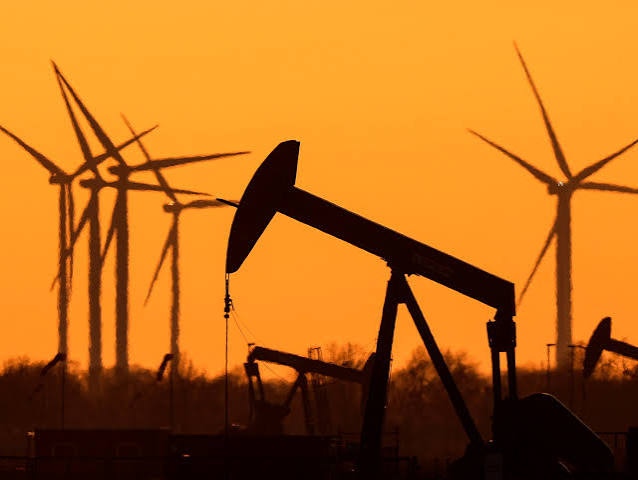
He maintained that African countries should be able to expand renewable energy, improve efficiency and reduce emissions while responsibly utilising their oil and gas resources for electricity generation, fertiliser production, petrochemicals and industrial development.
He argued that the principle of equity and common but differentiated responsibilities, reflected in the 2015 Paris Agreement, should receive greater attention in global climate discussions.
According to him, African countries should not be compelled to follow energy transition pathways that ignore their development realities or deepen existing energy poverty.
“Our objective in Africa should not be to defend any particular energy source indefinitely. It should be to defend Africa’s right and responsibility to pursue development with a realistic, diversified energy mix,” he said.
“Africa’s energy transition must be a transition from energy poverty to energy prosperity, not from energy poverty to deeper deprivation.”
He maintained that Africa’s ability to withstand future geopolitical disruptions would depend less on the resources beneath its soil than on its capacity to build the financial institutions, technological expertise and infrastructure needed to serve its people and industries.
For the continent, he said, the challenge is no longer simply discovering or producing energy resources, but building the systems that make those resources economically productive and accessible to Africans.