


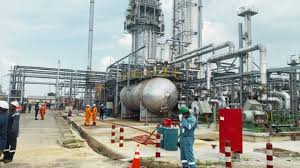
Nigeria has once again signed a deal to revive its long-moribund refineries. This time, the Nigerian National Petroleum Company Limited is partnering with Chinese firms in what is being framed as a Technical Equity Partnership. On paper, it sounds promising. In reality, Nigerians have every reason to be sceptical.

For decades, the Port Harcourt and Warri refineries have been less of national assets and more of fiscal sinkholes. Over $2.4 billion has been poured into rehabilitation efforts with little to no meaningful output. Each new administration has announced fresh “turnaround maintenance” plans, often with fanfare, only for the projects to stall, underperform, or quietly fade into irrelevance. The result is a cycle of waste, opacity, and missed opportunity.
So, what makes this latest deal different?
At first glance, the involvement of Chinese industrial partners suggests a shift toward technical depth and execution capacity. China’s track record in building and operating industrial clusters offers a model Nigeria has long struggled to replicate. The idea of linking refining with petrochemicals and gas-based industrial hubs is strategically sound. If done right, it could move Nigeria from a crude-exporting, fuel-importing paradox to a more integrated industrial economy.
But that “if” is doing a lot of heavy lifting.
The core problem has never been the absence of plans. It has been the failure of governance, execution, and accountability. Without fixing these structural weaknesses, this new agreement risks becoming just another expensive headline.
“The truth is simple: Nigeria does not need another refinery announcement. It needs working refineries.”
First, transparency must move from rhetoric to reality. Nigerians deserve to know the exact terms of this partnership, equity structure, financing obligations, timelines, and performance benchmarks. Too many refinery deals in the past have been shrouded in secrecy, creating room for inefficiency and abuse.
Second, there must be strict, measurable milestones tied to funding and execution. No more open-ended commitments. Payments and incentives should be linked to verifiable progress, equipment installation, mechanical completion, test runs, and eventual production output.
Third, professional management is non-negotiable. Political interference has been one of the biggest killers of efficiency in Nigeria’s state-owned enterprises. If these refineries are to work, they must be run on commercial principles, insulated from patronage and bureaucratic bottlenecks.
Fourth, Nigeria must be honest about competition. The emergence of the Dangote Refinery has fundamentally changed the landscape. Any revived state refinery must compete on cost, quality, and efficiency. Sentiment will not sustain them, only performance will.
Fifth, the country must rethink its broader energy strategy. Refining is not just about fuel; it is about industrialisation. Petrochemicals, fertilisers, plastics, and downstream manufacturing all depend on a functional refining ecosystem. This deal should not be treated as an isolated intervention but as part of a coordinated industrial policy.
If this initiative succeeds, the impact could be transformative. Nigeria could significantly reduce its dependence on imported fuel, easing pressure on foreign exchange reserves. Local refining could stabilise fuel supply, support job creation, and stimulate industrial growth. The development of associated industrial hubs could unlock new value chains and attract investment.
But failure would be costly, not just financially, but in credibility. Another botched refinery project would reinforce the perception that Nigeria is incapable of executing large-scale industrial projects, regardless of partnerships or funding.
The truth is simple: Nigeria does not need another refinery announcement. It needs working refineries.
This deal could mark a turning point, or it could become another chapter in a long history of waste. The difference will lie not in the signing ceremony, but in the discipline, transparency, and competence that follow.
For once, Nigeria must get it right.

