


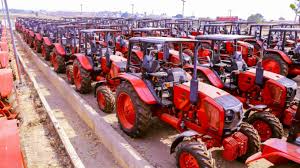
A Port Harcourt-based manufacturer of tractors, heavy machinery and farm implements is weighing plans to relocate to Rwanda or other African countries, citing Nigeria’s new duty-free import policy as a major threat to its survival.

The policy, which allows duty-free importation of tractors and electric vehicles—despite their local availability—has raised concerns among domestic producers about unfair competition and potential market distortion.
Ibifri A.C. Bobmanuel, president of the Rivers Entrepreneurs and Investors Forum (REIF) and managing director of Bobtrack Tractor Limited, confirmed that the company is actively considering relocation offers. He disclosed that Rwanda has proposed incentives, including up to 15 years of concessions and protectionist measures to support the firm’s growth.
“We may have to think outside the country to survive,” Bobmanuel said in an interview in Port Harcourt. “Rwanda has made a compelling offer, including long-term protections to help us establish and scale before facing open competition.”
Bobtrack, which has an annual production capacity of 6,000 tractors, is nearing completion of its Port Harcourt plant, while its Nasarawa facility currently assembles equipment for the northern market.
Bobmanuel warned that the removal of import duties could erode the price advantage of locally manufactured tractors, even though he insists they are more affordable and of higher quality than imported alternatives.
He also dismissed the notion that increased imports would attract foreign manufacturers to set up production in Nigeria, noting that global producers typically operate in markets with far larger demand volumes.
“If local manufacturers begin to leave, the country risks losing thousands of jobs and wasting years of investment,” he said.
The policy has also drawn criticism over its extension to electric vehicles. Bobmanuel revealed that Bobtrack is set to launch its own line of electric cars within months, supported by a new factory that integrates both tractor and EV production.
“All of these plans could be undermined by a single policy decision,” he said.
Industry stakeholders warn that unless the government reconsiders the policy, Nigeria may face an exodus of local manufacturers, with broader implications for industrialisation, employment and food security.

