


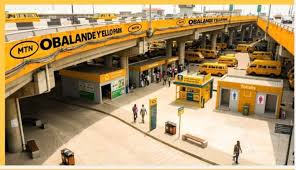
The Lagos State Government has formally handed over Obalende Park to MTN Nigeria for redevelopment and beautification, as part of its ongoing commitment to transforming underutilised public spaces into safe, functional, and environmentally sustainable infrastructure for residents.

Speaking on the development, Tokunbo Wahab, the Honourable Commissioner for the Environment and Water Resources, noted that the initiative aligns with the State Government’s broader vision of urban renewal and environmental sustainability.
Under its Corporate Social Responsibility (CSR) initiative, MTN Nigeria has adopted the Obalende Park space and will redesign it into a modern, world-class facility. The redevelopment will include an organised motor park, 60 public toilets, sleeping bays, Electric Vehicle (EV) charging points, and other essential amenities.
The project will also ensure the accommodation and maintenance of the McGregor Collector before, during, and after construction. It is expected to be completed within 21 weeks.
The Commissioner emphasised that prior to the handover, the government engaged transport workers operating within the park, assuring them that they would not be displaced during or after the redevelopment. He added that beyond aesthetic improvements, the project will significantly enhance safety, eliminate criminal hideouts, and improve environmental conditions within the Obalende axis.
Following the handover ceremony, the Commissioner led a team to inspect ongoing drainage cleaning works at George Street, Elegbata, in response to recent flooding experienced in the Apongbon area. The flooding, he explained, was partly due to ongoing construction activities that created unintended consequences. Immediate steps have since been taken to clear drainage channels and restore free flow into the Lagoon through the Savage/Elegbata Collector.
Further inspections were carried out on the ongoing channelisation of System 1, Odo Iya Alaro, following complaints of flooding from residents of Soluyi, Gbagada, and adjoining communities. Originally established in 1974, System 1 remains the largest primary drainage channel deflooding major parts of the mainland, including Ogudu, Mende, Ojota, Ifako, Gbagada, and Maryland. However, years of encroachment have narrowed sections of the channel, prompting government action to open up and expand its alignment to improve discharge capacity.
These interventions underscore the Lagos State Government’s sustained commitment to flood mitigation, environmental sustainability, and building a more resilient city for all residents.

