


Togo has expressed interest in increasing electricity imports from Nigeria as it seeks to meet rising domestic power demand and support expanding economic activity.

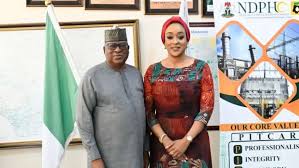
The request was disclosed by Jennifer Adighije after hosting officials from Compagnie Energie Electrique du Togo for talks on expanding the existing power supply arrangement.
The Togolese delegation, led by Débo K’mba Barandao, said the country currently imports about 75 megawatt-hours of electricity from the Niger Delta Power Holding Company under a bilateral supply agreement.
Barandao noted that electricity imports from Nigeria have helped sustain reliable and affordable power for households, businesses and public institutions in Togo. However, demand has grown significantly as more consumers, especially in the industrial and commercial sectors, are connected to the national grid.
“In view of this development, CEET is strongly interested in increasing the volume of electricity it off-takes from NDPHC,” he said, adding that additional supply from Nigeria would support the country’s expanding electricity access programme.
Responding, Jennifer Adighije, Managing Director of the Niger Delta Power Holding Company, said NDPHC is open to deepening energy cooperation with neighbouring countries. She explained that the company operates several power plants under the National Integrated Power Project, which could support increased electricity exports across the region.
She, however, stressed that any expansion in power exports would require bankable commercial agreements and credible payment guarantees to reduce risks associated with cross-border electricity trade.
Nigeria exports electricity to some West African countries partly to meet regional treaty obligations and generate foreign exchange. The arrangement is also linked to broader regional energy cooperation under the Economic Community of West African States.
However, data from the Nigerian Electricity Regulatory Commission shows that Togo, Niger and Benin collectively owed Nigeria about $17.8 million for electricity supplied under bilateral agreements as of 2025.
The development comes amid ongoing challenges in Nigeria’s power sector, including grid instability and low generation availability, which continue to affect reliable electricity supply across the country. ⚡
