


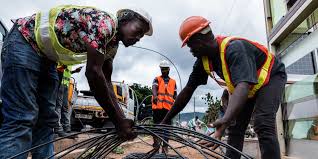
Nigeria has completed 60 per cent of its planned 90,000-kilometre national fibre-optic deployment, marking a major step in the country’s drive to expand broadband access and power its digital economy.

Bosun Tijani, Minister of Communications, Innovation and Digital Economy, disclosed this in Abuja while speaking at an event to mark Global Privacy Day, attended by technology leaders, policymakers and data protection advocates.
The fibre project, unveiled in August 2025, is one of the most ambitious digital infrastructure initiatives in Nigeria’s history. According to Tijani, significant groundwork has already been completed, with funding fully secured for the entire project.
“When I talk about connecting 90,000 kilometres of fibre, it’s not just a dream,” the minister said. “We have already delivered about 60 per cent of that work, and the money for the project has been secured.”
He described the rollout as central to President Bola Tinubu’s vision of building a $1 trillion economy anchored on shared prosperity, noting that reliable broadband is critical for education, entrepreneurship, innovation and inclusive economic growth.
Beyond terrestrial infrastructure, Tijani revealed that the Federal Government has received approval to procure two new communication satellites, a move aimed at extending connectivity to remote and underserved communities where fibre deployment may be difficult.
Nigeria is currently the only country in West Africa with a known communication satellite. The additional satellites, he said, will strengthen national coverage, complement fibre infrastructure and ensure that rural schools, communities and businesses are not left out of the digital economy.
While highlighting progress, the minister stressed that infrastructure alone is not enough. He emphasised that data protection and privacy must remain central to Nigeria’s digital transformation, noting that public trust is essential for the widespread adoption of digital services.
He added that the government, working through institutions such as the Nigerian Data Protection Commission, is committed to ensuring that connectivity growth goes hand-in-hand with strong privacy safeguards.
As Nigeria accelerates its broadband expansion, combining fibre on the ground with satellite coverage from space, the government says the goal remains clear: to build a secure, inclusive and resilient digital ecosystem that serves every Nigerian, regardless of location.

