


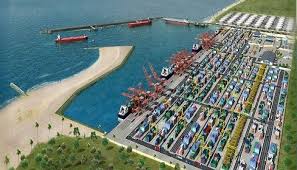
Lekki Deep Sea Port, Nigeria’s first deep seaport, is now operating at nearly 50 per cent of its designed capacity, marking a major milestone less than two years after the commencement of operations.

Wang Qiang, the port’s Managing Director, said the growth reflects rising confidence among shipping lines and cargo owners, with container volumes increasing steadily since September.
To sustain momentum, Lekki Port is prioritising multimodal connectivity and full digital integration. While barge operations currently handle about 10 per cent of cargo evacuation, management says rail connectivity will be critical to long-term efficiency, especially as industrial activities within the Lekki Free Zone expand.
The ongoing Lagos-Calabar Coastal Road is expected to improve road access to the port. However, port officials stress that rail infrastructure remains essential to achieving scale and reducing logistics bottlenecks.
On the digital front, the terminal is already fully automated, but officials note that the full benefits of automation will only be realised when all government agencies adopt end-to-end digital processes.
Echoing this outlook, Captain Jedrzej Mierzewski, CEO of Lekki Freeport Terminal, said the facility has grown rapidly to become Nigeria’s second-largest terminal. He added that with its modern infrastructure and operational efficiency, Lekki Port aims to emerge as a leading transhipment hub for West Africa.
