
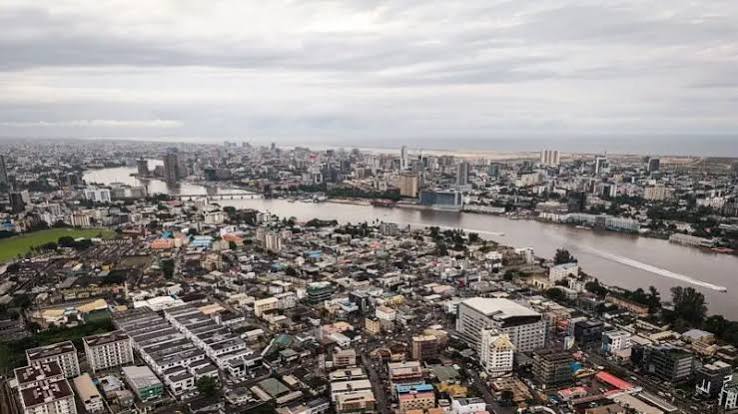
Lagos is sinking faster than previously estimated, with new research showing that the ground beneath the city is subsiding by an average of 5 millimetres annually. The finding raises fresh concerns about the city’s vulnerability to coastal flooding, rising sea levels and the long-term safety of its infrastructure. The study, conducted by scientists from Virginia Tech and reported by the BBC, examined land movement across 20 African coastal cities using satellite radar data. It found that Lagos and Alexandria, Egypt, are experiencing higher rates of land subsidence than estimates published by the Intergovernmental Panel on Climate Change (IPCC) in 2021.

According to the research, Alexandria is sinking at approximately 6 millimetres annually, while Lagos records an average annual decline of 5 millimetres. The researchers warned that even relatively small changes in land elevation could substantially increase flood exposure over time, particularly in densely populated coastal cities.
The study estimates that approximately four million people in Lagos could be exposed to extreme sea levels by the end of the century. Across the 20 cities examined, about seven million people, one million buildings and assets valued at $180 billion could be exposed to flood risks by 2050.
Lead author Oluwaseyi Dasho said land subsidence could significantly worsen flood exposure over several decades, even though the gradual movement of the ground may not be immediately noticeable to residents. Land subsidence occurs when the ground gradually sinks, reducing the elevation of an area relative to sea level. When combined with rising sea levels, coastal erosion and increasingly severe rainfall, the process can heighten the risk of flooding.
The study also identified significant land subsidence in Luanda, Angola, while Durban, South Africa, was found to be relatively stable or experiencing slight land elevation increases.
The researchers identified excessive groundwater extraction, land reclamation and construction on loose ground as possible contributors to Lagos’ sinking land surface. The expansion of artificial islands and developments created through land reclamation could increase pressure on the city’s fragile coastal environment. Construction on loose or poorly consolidated soil may also contribute to ground settlement.
Excessive extraction of underground water is another concern. When groundwater is pumped out faster than natural processes can replenish it, underground soil layers may compact, gradually lowering the land surface.
Senior author Manoochehr Shirzaei, a professor of geosciences, said many human-related causes of land subsidence are localised and can be addressed through targeted policy interventions. He identified reducing excessive groundwater extraction and providing alternative water sources as measures that could help limit some of the activities contributing to land subsidence.
The researchers also recommended stronger flood defences and, where necessary, relocating critical infrastructure to higher ground.
The research relied on radar imagery from the European Space Agency’s Sentinel-1 satellites to measure changes in land elevation across the selected cities. The satellites revisit the same locations every six to 12 days, allowing scientists to detect land movements as small as 1 millimetre annually.
Shirzaei said improved monitoring could help governments identify locations where previous climate assessments underestimated subsidence risks and direct resources towards more vulnerable communities and infrastructure. The findings, published in Science Advances, could also help address monitoring gaps in other vulnerable regions, including Pacific island nations.