


By Augustine Togonu-Bickersteth

Dear Governor Of Central Bank, Olayemi Cardoso,
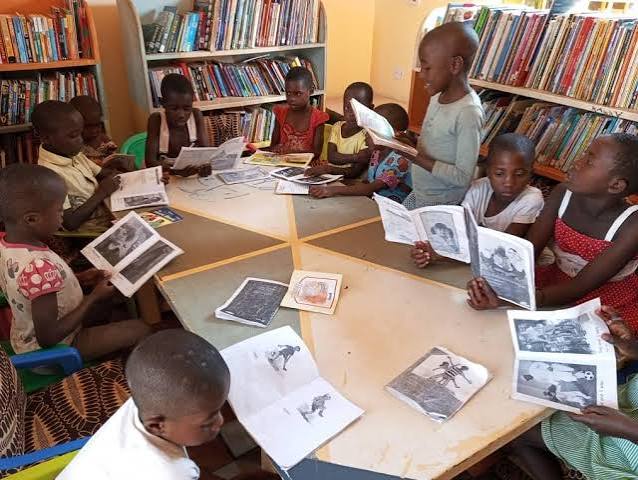
You have achieved macroeconomic growth and stability. Highest foreign reserves in 17 years. Now I am urging you to spend two and a half per cent of the foreign reserves for library development, reading promotion, and mass literacy, especially amongst the 30 million farmers in Nigeria.
Many of the books procured would be on ICT, artificial intelligence, creative industries and entrepreneurship. Books on how to earn income from your smartphone, laptop, or desktop.
These are some of the books in great demand by Nigerian youths.
How to make money out of Instagram. Facebook, Substack, Twitter, WhatsApp, LinkedIn WordPress. Etc. Books on Web design. Books on humour writing and comedy.
Books on how to make money as a content creator. If you do these, there would be a critical mass of solopreneurs, and like they say in nuclear physics, a chain reaction
Note also books on solopreneurship.
So you have. An explosion of economic growth at the microeconomic level. Because 140 million Nigerians have smartphones. Please do not forget books on smartphone photography.
I have one titled Android smartphone photography for dummies. Books on creative writing and filmmaking may be so expensive, and so is the need for libraries.
You can talk to your brother, the managing director of NNPC, Ojulari, to contribute to library development as corporate social responsibility. It’s an investment, not a cost.
Like Benjamin Franklin said, money poured into your brain is never wasted. He was known as the inventor of America and the poor man’s Confucius. Mr Olayemi Cardoso you too can reinvent Nigeria through library development, reading promotion, and mass literacy. One of your best bets is Professor David Elaturoti of the Abadlna Media Resource Centre, University of Ibadan. Aside from the national librarian. Professor Chinwe Veronica Anunobi
I write to you partly because you are a Gregorian. My late father was also a Gregorian.
All the Gregorians I know have good reading habits.
Of course, if they happened to have been born in the mid-1930s, they probably all had extensive libraries like my father, now late.
My father, now late, believed in backing everything he did or I did with books. Hobbies, interests, profession, career, or vocation with books.
Below is an AI-generated article
Libraries drive job creation and poverty reduction by functioning as free community hubs. They offer public internet, digital training, résumé-building workshops, and small business support centres that equip marginalised individuals with the tools needed to secure employment and build financial stability.
Job Creation and Business Support
Small Business Hubs: Networks like Business & IP Centres help entrepreneurs launch and scale companies, generating thousands of local jobs.
Access to Technology: Free high-speed Wi-Fi, computers, and software allow job seekers to search listings and submit applications.
Skill Workshops: Libraries host resume writing, interviewing classes, and technical training tailored to modern labour needs.
Poverty Reduction and Social Mobility: Bridging the Digital Divide: Providing uninhibited internet access ensures low-income residents can connect with remote work, government aid, and educational resources.
Combating Information Poverty: Free literacy programs, lifelong learning courses, and financial literacy workshops break generational cycles of disadvantage.
Stigma-Free Assistance: As trusted, non-judgmental spaces, libraries reach vulnerable populations who might otherwise avoid formal welfare or employment agencies.
Augustine Togonu-Bickersteth, Convener, Club of Nigerians Worldwide (CNW), London, England

