…At its inaugural edition in Lagos, the Africa Sustainability Forum brought business leaders, policymakers and sustainability advocates together to examine how Africa can pursue economic growth, create jobs and protect the environment without leaving vulnerable communities behind.

Africa’s sustainability conversation is entering a more consequential phase. Beyond commitments, policy statements and corporate pledges, the challenge is to translate ambition into economic opportunities, better livelihoods and measurable improvements in people’s lives.
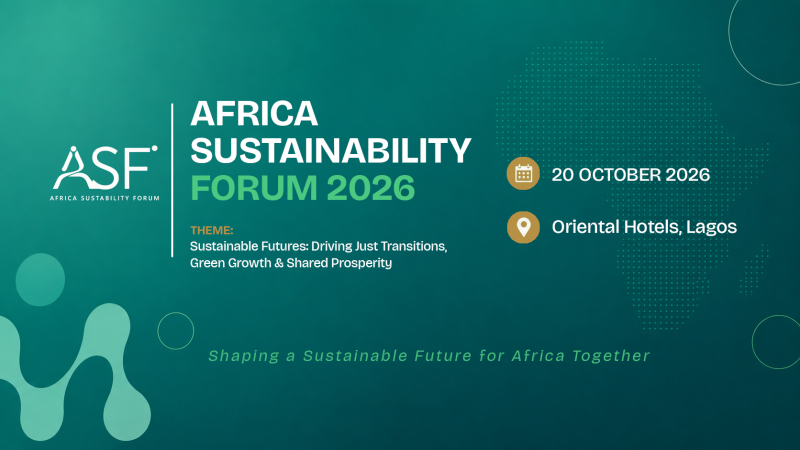
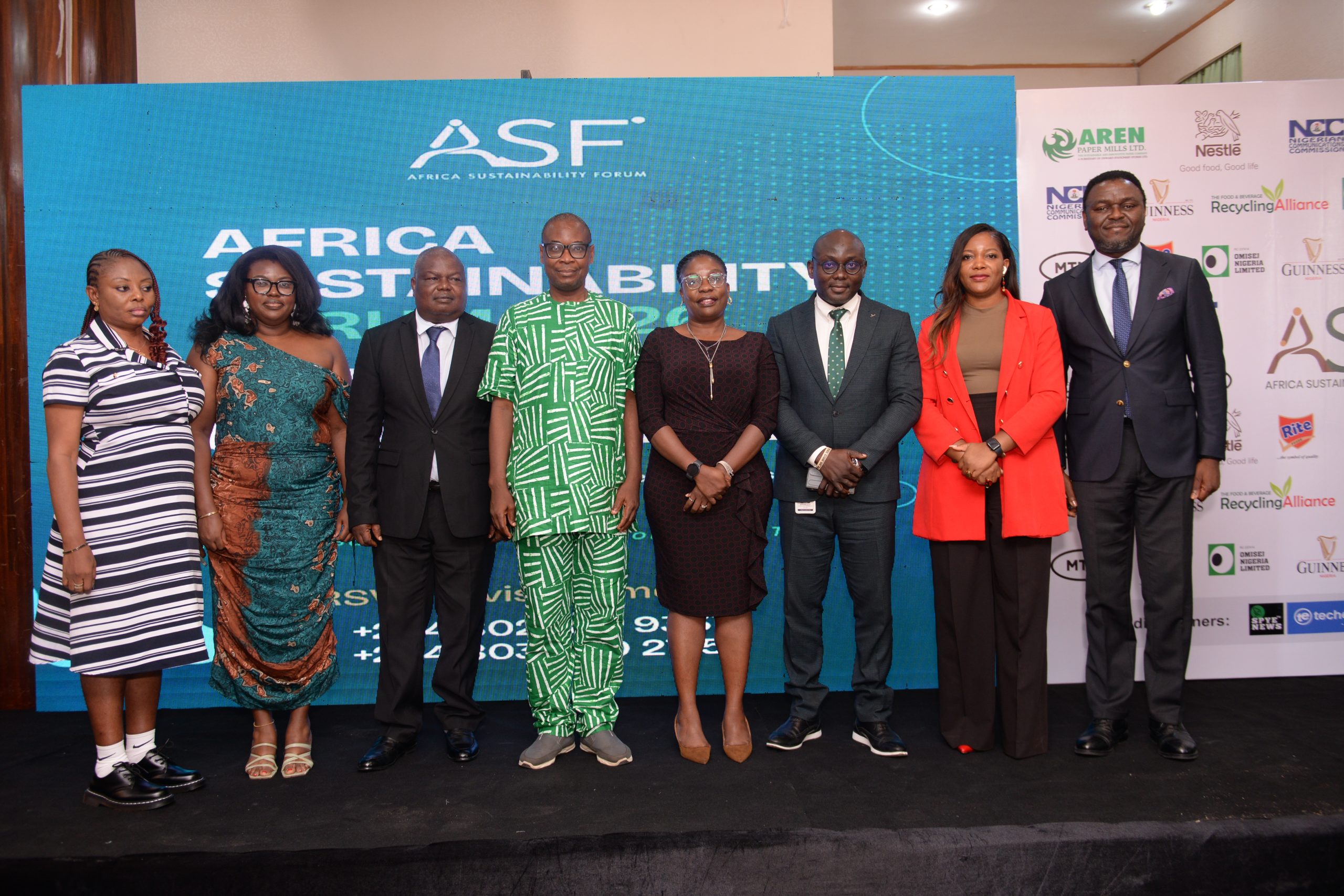
This was the central question at the inaugural Africa Sustainability Forum 2026, organised by TheNumbersNG.com and held on Tuesday, October 20, at Oriental Hotel, Lekki, Lagos.
With the theme, “Sustainable Futures: Driving Just Transitions, Green Growth and Shared Prosperity,” the Forum brought together business leaders, policymakers and sustainability professionals to examine the choices that will shape Africa’s economic and environmental future.
The discussions reflected a fundamental reality: sustainability cannot be separated from the continent’s development priorities. For Africa, the transition to a greener economy must also address poverty, unemployment, energy access, industrialisation, skills development and economic inclusion.
The question is not simply how to make economic activity greener. It is how to ensure that the transition creates opportunities for more people, strengthens businesses and improves the quality of life across communities.
A major contribution to the conversation came from Marilyn Obaisa-Osula, Partner and Head of ESG, Sustainability and Climate at PwC Nigeria, who delivered the lead paper titled “What Does a Just Transition Mean to Africa?”
Her subject addressed one of the most important questions confronting policymakers and businesses as climate action gains urgency.
A just transition recognises that the movement towards a low-carbon and more sustainable economy has consequences for workers, communities, industries and consumers. While new opportunities may emerge in renewable energy, recycling, resource efficiency and sustainable agriculture, some existing jobs and livelihoods may also come under pressure.
She quoted the ILO description that “Just Transition is greening the economy in a way that is as fair and inclusive as possible to everyone concerned, creating decent work opportunities and leaving no one behind.”
For African countries, the challenge is particularly complex. Many economies are still working to expand electricity access, build industrial capacity and create sufficient employment for rapidly growing populations.
A transition that ignores these realities risks deepening existing inequalities. One that integrates them into planning can help create new industries, improve productivity and expand access to opportunity.
This requires more than environmental targets. It calls for policies that support workers, investments in relevant skills, affordable access to cleaner technologies and financing that enables businesses to adapt without undermining their competitiveness.
The Forum provided a platform for examining these issues within the context of Africa’s development aspirations.
She argued that most African countries are still building their energy systems, so the transition has to expand access and support industry while keeping emissions low
The role of public institutions was also reflected in the keynote address by Dr Aminu Maida, Executive Vice Chairman of the Nigerian Communications Commission (NCC), represented by Mrs Oluntunde Osunleye, Principal Manager, Regulatory Services.
The participation of the telecommunications regulator broadened the conversation beyond traditional environmental concerns and towards the role of technology, infrastructure and regulation in enabling sustainable development.
Telecommunications networks and digital platforms can support financial inclusion, access to information, more efficient business operations and new employment opportunities. At the same time, the sector must contend with energy consumption, electronic waste and the environmental implications of expanding digital infrastructure.
These considerations underline the importance of aligning technological progress with responsible resource use.
For businesses, sustainability is increasingly connected to questions of resilience, efficiency, reputation and long-term value creation. Companies that integrate environmental and social considerations into their operations may be better positioned to anticipate risks, respond to changing stakeholder expectations and identify emerging markets.
However, meaningful progress depends on practical implementation. Businesses need clear and consistent policies, access to finance, appropriate infrastructure and credible ways to measure their impact.
Finance remains one of the critical issues in the transition to a more sustainable economy.
During a fireside conversation, Mr Fola Odufuwa, Managing Director of New Frontier Capital Advisors, contributed a financial and investment perspective to the Forum’s discussions.
The challenge for Africa is not simply to identify sustainable projects but to mobilise the capital required to implement them at scale.
Renewable energy, waste recovery, water infrastructure, sustainable agriculture and resource-efficient manufacturing all require investment. Yet many businesses and communities face barriers that limit their ability to secure affordable, long-term financing.
Unlocking capital will require collaboration among governments, financial institutions, development partners and the private sector. It will also require bankable projects, credible governance, transparent reporting and a clearer understanding of the risks and returns associated with sustainable investments.
For small and medium-sized enterprises, which are central to employment and economic activity across Africa, access to appropriate financing could determine whether sustainability becomes a competitive advantage or remains an aspiration beyond their reach.
The discussion therefore points to a wider imperative: sustainable finance must support the businesses and infrastructure capable of delivering tangible economic and social benefits.
The Forum also benefited from goodwill messages by Olori Data Matemilola, Executive Director of Solace Foundation and Project Director of the Olowu Hope Initiative, and Chinwe Obi, Sustainability Manager at Nestlé Nigeria.
Their participation reflected the importance of bringing different perspectives into the sustainability conversation, including those of civil society, community-focused initiatives and businesses working to integrate sustainability into their operations.
A panel discussion further explored the challenges and opportunities involved in building an inclusive green economy.
The panel featured Ola Igwe, Business Operations and Revenue Operations at ALX; Engr Monday Irenoa, Managing Director of Omisej Nigeria; Agharese (Arese) Lucia Onaghise, Executive Director of the Food and Beverage Recycling Alliance; and Dr Adeyemi Adun, Group Lead, Environmental and Sustainability at Dangote Industries Limited. Babajide Benson moderated the session.
The breadth of representation highlighted the cross-sector nature of the sustainability challenge. Technology, manufacturing, skills development and recycling may appear to be distinct fields, but each has a role to play in determining how resources are used, how jobs are created and how the benefits of economic activity are distributed.
Circular economy practices, for example, can help reduce waste while creating opportunities in collection, sorting, processing and the manufacture of recycled materials. Yet these opportunities depend on functioning collection systems, viable markets for recovered materials, investment in processing infrastructure and policies that encourage responsible production and consumption.
Similarly, green skills will be essential if young Africans are to participate meaningfully in emerging industries. Training must be connected to actual market demand, while businesses need incentives and the capacity to create decent, productive employment.
These are the practical connections that must inform Africa’s sustainability agenda.
The inaugural Africa Sustainability Forum was an important starting point, but the real measure of its value will lie in what follows.
Conferences can raise awareness, build relationships and generate ideas. Lasting change, however, requires sustained engagement, measurable commitments and partnerships that move from discussion to implementation.
For policymakers, this means creating an enabling environment for investment while ensuring that environmental and social considerations are reflected in economic planning.
For businesses, it means treating sustainability as part of strategy, governance and operational performance rather than as a peripheral corporate responsibility activity.
For financial institutions, it means developing financing approaches that can support credible sustainability projects and widen access to capital.
For the media, it means going beyond reporting announcements to examine outcomes, question claims, track commitments and explain how sustainability policies affect businesses, workers and households.
This is an important role for TheNumbersNG.com as it builds on the Forum and expands its coverage of sustainability, business responsibility, climate action and inclusive growth.
Africa needs a sustainability agenda that reflects its realities while preparing its economies for the future. Such an agenda must be ambitious without being detached from the challenges people face today. It must encourage investment without overlooking inclusion, and promote environmental responsibility without losing sight of jobs, affordability and economic opportunity.
The message emerging from the Forum is clear: a sustainable future cannot be built on environmental ambition alone. It must also be built on sound economics, effective institutions, responsible businesses and a commitment to shared prosperity.
The next phase is to turn these principles into practical action – and to ensure that the transition delivers benefits that Africans can see and feel in their everyday lives.