
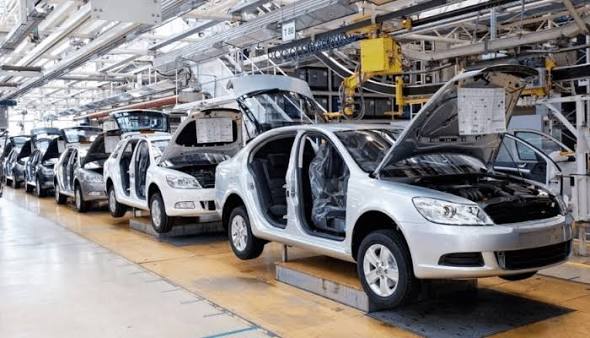
The Federal Government has directed Ministries, Departments and Agencies (MDAs) to procure vehicles assembled in Nigeria, warning that institutions that fail to comply could face sanctions.

The directive is aimed at boosting local automobile manufacturing, creating jobs and reducing the country’s dependence on imported vehicles.
By requiring public institutions to patronise domestic assemblers, the government hopes to provide a more reliable market for locally produced vehicles and encourage investment across the automotive value chain.
The policy could benefit vehicle assemblers, component manufacturers, spare-parts suppliers and automotive service providers, while supporting skills development and technology transfer.
However, the extent of these benefits will depend on the capacity of local manufacturers to meet government demand and provide vehicles that are competitively priced, reliable and supported by adequate maintenance services.
The directive also raises questions about how the government will monitor compliance across its various institutions and what sanctions will apply to agencies that disregard the order.
For Nigeria’s automotive industry, sustained government patronage could give local assemblers greater certainty about demand, potentially encouraging them to expand production and invest in manufacturing capacity.
However, the policy’s long-term impact will depend on more than procurement rules. Local manufacturers must be able to meet quality standards, maintain competitive prices and develop stronger domestic supply chains.
The directive represents another effort to translate Nigeria’s local-content ambitions into tangible industrial growth. Its success will ultimately be measured by whether it leads to increased domestic production, sustainable employment and a stronger automotive manufacturing sector.