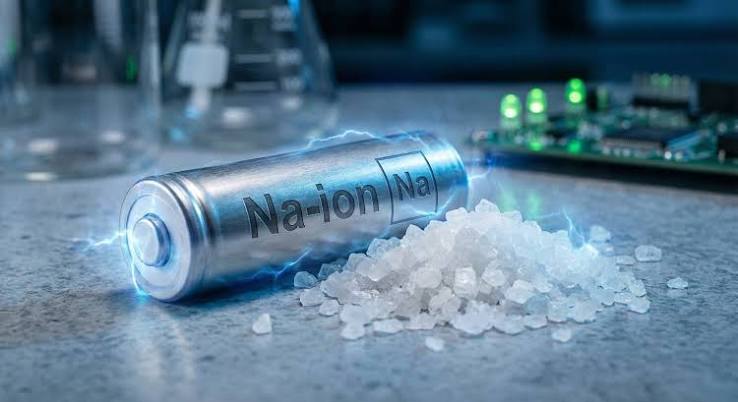
US battery start-ups are turning to sodium-ion technology in an effort to rebuild domestic battery manufacturing and reduce reliance on China for critical energy-storage components.

The push is gaining momentum as demand for battery storage rises, driven partly by extreme weather and the growing electricity needs of data centres.
San Diego-based Unigrid is among the companies seeking to establish a foothold in the emerging market. The company makes a nine-kilowatt-hour battery for homes and has reported rising demand from European consumers seeking to store cheaper grid electricity and use it to power air conditioners during periods of peak heat.
“We have requests coming from Spain, France, Germany, The Netherlands,” said Darren Tan, Unigrid’s co-founder and chief executive.
The company has shipped its first 100 units and expects to deliver 1,000 before the end of the year.
Unlike conventional lithium-ion batteries, Unigrid’s system uses sodium-ion technology, which is attracting interest because of its potential for lower costs, improved temperature performance and reduced fire risk. Sodium-ion batteries can potentially operate in temperatures as low as minus 40 degrees Celsius.
However, the technology remains at an early stage, with questions around battery chemistry, safety, cost and large-scale manufacturing.
China currently leads global sodium-ion battery production, giving US companies a significant challenge as they seek to develop domestic supply chains.
The potential prize is substantial: batteries manufactured in the US using materials sourced entirely within the country. That would offer an alternative to lithium-ion supply chains, in which China has a dominant position in both manufacturing and key materials.
For now, however, even some US start-ups depend on Chinese components.
Unigrid’s batteries currently use sodium-ion cells produced in China. Tan said the company could switch to US-made cells in future, although the cost could be different.
Sodium-ion technology is also facing scrutiny over the materials used in some battery designs.
Unigrid’s battery uses chromium-3 in its cathode. Clare Grey, a professor at the University of Cambridge and co-founder of battery company Nyobolt, has warned that chromium-3 could, under certain conditions, form chromium-6, a toxic substance associated with cancer.
Ivana Hasa of the University of Warwick, who has no connection to Unigrid, said the transformation could occur at very high states of charge but could be mitigated through voltage controls.
Tan, however, said concerns about the toxicity of the company’s battery materials were overstated. He said the battery had passed certification and safety tests for sale in Europe and was undergoing similar evaluations for the US market.
He also said third-party testing had failed to produce chromium-6, even after attempts to overcharge the batteries.
Battery manufacturers are exploring different approaches to sodium-ion chemistry, including cathodes made with hard carbon and sodium iron phosphate pyrophosphate.
Industry confidence in sodium-ion technology has increased in recent years, particularly for grid-scale energy storage.