


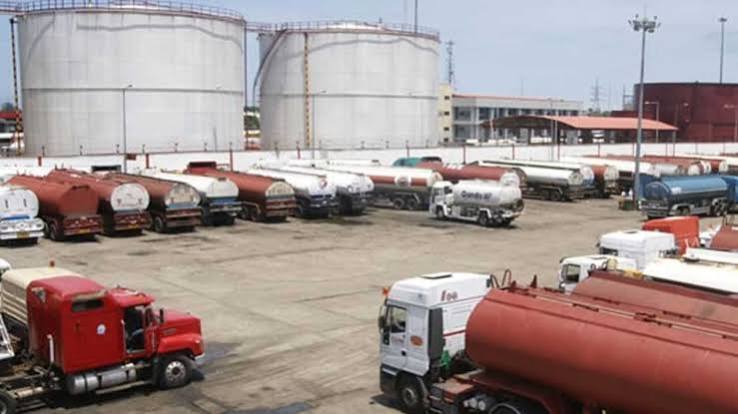
Nigeria’s edible oil tanker drivers have threatened to begin an industrial strike on September 22 over alleged interference in their operations by the Petroleum Tanker Drivers (PTD) branch of the Nigeria Union of Petroleum and Natural Gas Workers (NUPENG).

The National Union of Edible Oil Tanker Drivers of Nigeria (NUEOTDN) issued the warning in Lagos, saying the dispute over union jurisdiction and alleged harassment of its members must be resolved before the deadline.
The union’s General Secretary, Tajudeen Usman, disclosed this at a news conference, according to the News Agency of Nigeria (NAN).
Usman, who spoke on behalf of NUEOTDN President Ilias Aperun, said the union would commence the action from midnight on September 22 if its concerns were not addressed.
The proposed strike could disrupt the transportation and distribution of edible oil across parts of the country, with potential implications for the food supply chain.
NUEOTDN accused the PTD branch of NUPENG of encroaching on its jurisdiction, allegedly harassing its members and disrupting its operations.
The union also alleged that the Amalgamated Union of Wharf Truck Owners of Nigeria (AUTOWN) was operating in the sector through the Wharf 302 Products and Beverages Association.
According to Usman, the union has sought the intervention of the Federal Ministry of Labour and Employment, the Ministry of Health, security agencies and relevant regulators, but the dispute remains unresolved.
“Our objective is to protect the legitimate interests of our members and ensure that the transportation of edible oil and food-grade products is carried out in an orderly, safe, hygienic and lawful environment,” he said.
The union is also demanding the use of dedicated tankers for edible oil transportation.
It argued that tankers previously used to transport petroleum products should not be deployed for food-grade products because of potential food-safety and hygiene concerns.
The Nigeria Labour Congress (NLC), Lagos State Council, has called for government intervention to prevent the dispute from escalating.
Olabisi Idowu, NLC Lagos Vice Chairman, urged the Federal Government, Lagos State Government, security agencies and the unions involved to meet and resolve the disagreement.
Idowu also called for clearer definition of union jurisdictions through the Register of Trade Unions, arguing that this could help prevent recurring jurisdictional disputes.
He further appealed to NUPENG leadership to intervene and prevent the disagreement from developing into a wider industrial or security crisis.
“We will not sit down and allow anybody to create any crisis, especially in Lagos,” he said.
The President of the Marketers and Sellers of Edible Oil Association of Nigeria, Labaran Sidi, also alleged interference with the activities of members at refineries and depots.
The association’s Vice President, Victoria Oke, maintained that edible oil tanker operators are distinct from NUPENG because their members transport food products rather than petroleum products.
The dispute comes against the backdrop of tighter regulation of edible oil transportation in Lagos.
In May, the Lagos State Government banned petroleum tankers from being used in the edible oil distribution chain as part of measures aimed at improving transportation safety, hygiene and compliance.
The restriction followed a Memorandum of Understanding between the Lagos State Consumer Protection Agency and industry stakeholders, including the Marketers and Sellers of Edible Oil in Nigeria (MASEON), the National Association of Road Transport Owners (NARTO) and the Association of Edible Oil Tanker Drivers under ETD/NUEOTDN.
Under the agreement, stakeholders committed to the use of food-grade certified tankers for edible oil transportation, alongside improved hygiene, traceability and operational standards.
The regulatory changes reinforce NUEOTDN’s argument for dedicated food-grade tankers.
However, an industrial action by tanker drivers could also create additional pressure on an edible oil supply chain already facing concerns around transportation, safety and compliance.

