


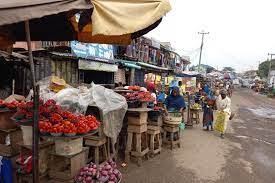
Nigeria’s food inflation rate accelerated sharply to 20.31 per cent year-on-year in July 2026, reaching its highest level since September 2025 and highlighting continued pressure on household food budgets.

The latest figure was contained in the Consumer Price Index (CPI) report released by the National Bureau of Statistics (NBS).
The surge in food prices came despite a moderation in Nigeria’s overall inflation rate. Headline inflation fell to 15.43 per cent in July, down from 15.91 per cent in June, according to the NBS.
The contrasting movements suggest that while broader price pressures are easing, consumers are yet to see similar relief at the food market.
Food inflation stood at 17.52 per cent in June, meaning the July rate represents a significant month-on-month acceleration.
The rate has risen steadily since the beginning of 2026 after falling sharply in the final months of 2025.
Food inflation declined from 20.16 per cent in September 2025 to 16.30 per cent in October and 14.21 per cent in November. It fell further to 10.84 per cent in December and reached a low of 8.89 per cent in January 2026.
The downward trend was reversed in February, when food inflation rose to 12.21 per cent. It subsequently climbed to 14.31 per cent in March, 16.06 per cent in April, 16.96 per cent in May and 17.52 per cent in June.
By July, the rate had crossed the 20 per cent mark again.
The July figures show a widening gap between food inflation and headline inflation.
Headline inflation declined by 0.48 percentage points, from 15.91 per cent in June to 15.43 per cent in July.
Urban inflation stood at 16.12 per cent year-on-year, while rural inflation was lower at 13.77 per cent.
On a month-on-month basis, urban inflation eased to 1.90 per cent in July from 2.13% in June. Rural month-on-month inflation, however, increased to 0.78 per cent from 0.52 per cent.
The figures indicate that the overall moderation in inflation has not translated into equivalent relief for food prices.
The Federal Government has continued to introduce policies aimed at reducing the cost of living and improving food supply.
Earlier in 2026, the government began reducing import duties on selected essential goods, including food staples, as part of broader fiscal measures intended to ease pressure on consumers.
Nigeria’s food and beverage imports were valued at N1.393 trillion between January and March 2026, according to NBS trade data. This was lower than the N1.671 trillion recorded during the same period in 2025, representing a decline of about 16.7 per cent
The government has also placed greater emphasis on agricultural production and mechanisation.
Agriculture and Food Security Minister Senator Abubakar Kyari recently unveiled a National Agricultural Mechanisation Policy and a National Agricultural Mechanisation Investment Strategy designed to build a commercially viable agricultural mechanisation ecosystem.
Among the plans is a mega tractor assembly plant expected to produce between 2,000 and 4,000 tractors annually.
The latest inflation figures underscore a key challenge for Nigeria’s economy: a decline in headline inflation does not necessarily mean that households are experiencing lower living costs.
Food accounts for a substantial share of household expenditure, particularly for low- and middle-income families. Consequently, a renewed acceleration in food inflation can continue to squeeze household incomes even when the overall inflation rate is declining.
The July increase therefore puts pressure on policymakers to move beyond measures that moderate headline inflation and focus more directly on food production, transportation, storage, market access and supply-chain efficiency.
With food inflation now at 20.31 per cent, the latest data suggest that restoring purchasing power will require sustained action to increase domestic food supply and reduce the cost of getting farm produce from producers to consumers.

