


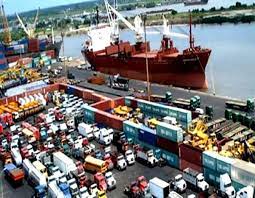

A 7 per cent surcharge on imports has sparked protests by freight forwarders at Onne Port, Rivers State, raising concerns over possible revenue losses as operators complain of multiple taxation and rising shipping charges.
The protest, led by the Association of Nigeria Licensed Customs Agents (ANLCA) alongside three other freight forwarding groups, began on February 4, 2026, with members picketing the offices of Pacific International Lines (PIL) and suspending business with the shipping firm.
The associations accuse PIL of arbitrary increases in freight charges, the imposition of a 7% surcharge, and refusal to reverse the hike despite advice from the Nigerian Shippers’ Council. Other groups involved include the Association of Registered Freight Forwarders of Nigeria (ARFFN), the National Association of Government Approved Freight Forwarders (NAGAFF) and the National Council of Managing Directors of Customs Licensed Agents.
The picketing entered its second day on Thursday, with sources at the Nigeria Customs Service (NCS), Area II Command, warning that prolonged disruption could threaten revenue generation at the port.
Explaining the protest, Ifeanyi Isikaku, chairman of ANLCA’s Onne Seaport chapter, said freight forwarders were being forced to pay the same 7 per cent surcharge twice, once through Customs duties and again by shipping lines.
“When we pay Customs duty, the 7 per cent surcharge is already embedded. Shipping companies should not charge us the same levy again. That amounts to double taxation, and we want it removed from their invoices,” Isikaku said.
Similarly, Obinna Ugochukwu and Okechukwu Anselem Ike, chairmen of the Onne Seaport chapters of ARFFN and NAGAFF, described the surcharge and freight hike as arbitrary, urging PIL to maintain existing charges in line with directives from the Shippers’ Council, which had called for stakeholder consultations before any increase.
Meanwhile, the Comptroller of NCS Area II Command, Aliyu Mohammed Alkali, said the command had sustained strong revenue performance through collaboration with stakeholders, recording a 15.4 per cent increase in revenue in 2025 compared to 2024.
Speaking at a stakeholders’ meeting in Onne on February 3, 2026, Alkali stressed the importance of proper cargo documentation, noting that findings from the Time Release Study (TRS) launched in January showed that documentation lapses remain a major cause of clearance delays.
He warned against misuse of Pre-Arrival Assessment Reports (PAAR) meant for other commands, urged shipping lines to clearly state cargo intentions in manifests, cautioned against tampering with container tracking devices, and advised operators to renew Customs bond licences promptly to avoid disruptions.

