The mobile phone has evolved from a luxury for a few into a bank, classroom, marketplace, office and livelihood. The next challenge is turning that connectivity into productivity.

Twenty-five years ago, making a telephone call in Nigeria could feel like an achievement. Fixed telephone lines were scarce, and families sometimes relied on the number of a neighbour, office or nearby business as their contact. For many Nigerians, the nearest practical option was a business centre displaying the familiar sign: “Make Your Phone Calls Here.”
Then came GSM.
The arrival of mobile telecommunications in 2001 changed not only the way Nigerians communicated but also the trajectory of the country’s economy. At the time, Nigeria had only about 400,000 connected telephone lines, while teledensity stood at approximately 0.40 per cent. Telephone access was limited, and acquiring a line could take considerable time.
Twenty-five years later, the conversation has changed dramatically. The mobile phone is no longer primarily a device for making calls. It has become a bank, classroom, marketplace, office, entertainment centre, information source and, for millions of Nigerians, a means of earning a living.
That transformation was at the heart of the keynote delivered by Dr. Aminu Maida, Executive Vice Chairman and Chief Executive Officer of the Nigerian Communications Commission, at the eWorld Forum 2026, where Nigeria’s GSM revolution was commemorated at 25. For Maida, however, the anniversary is not simply an occasion to celebrate the past. It is an opportunity to ask a more important question: what does Nigeria do with the connectivity it has built?
The foundation for the transformation was laid even before the first GSM calls. The liberalisation of the communications sector, set in motion by the National Telecommunications Policy of 2000, opened the market to investors, encouraged competition and created an environment for network expansion.
The impact was profound. The scarcity of telephone lines gave way to widespread mobile access, while operators, infrastructure providers, equipment vendors, engineers and other businesses became part of a rapidly expanding telecommunications ecosystem.
The scale of the transformation is evident in the numbers. According to NCC historical data, Nigeria’s active mobile GSM lines rose from about 40 million in 2007 to nearly 139 million in 2024. By July 2026, the NCC reported 157.27 million mobile GSM subscriptions, alongside 124.42 million broadband subscriptions.
But behind the statistics are millions of individual stories. A student attends an online class. A trader receives payment from a customer. A farmer accesses market or agricultural information. A developer writes software. A content creator reaches an audience. A small business owner communicates with customers.
This is why the GSM revolution became much bigger than voice.
The transition from 2G to 3G, 4G and now 5G created the platform on which Nigeria’s digital economy has expanded. Fintech grew rapidly. E-commerce gained traction. Digital entertainment reached mass audiences. Logistics became increasingly technology-enabled, while online education, the creator economy, software development and digital entrepreneurship gained new opportunities.
Yet the next phase presents a more complicated challenge: connectivity is not necessarily the same as inclusion.
A network can cover a community without that community being meaningfully connected. Someone may have coverage but no smartphone, or a smartphone but insufficient money for data. A school may have internet access but lack the bandwidth required for effective digital learning. A community may have a signal but inadequate network capacity.
The distinction is becoming increasingly important. The question is no longer simply how many Nigerians can connect. It is how effectively they can use that connection to improve their lives and productivity.
Maida described the shift as moving beyond counting connections towards improving “the quality of those connections and what Nigerians can achieve with them.”
For Nigeria, this makes rural and underserved communities particularly important. Closing the adoption gap will require substantial investment in fibre, resilient mobile networks, towers, data centres, satellite capacity and international connectivity. It will also require business models capable of serving communities where traditional network economics have proved difficult.
Private capital will remain important, but investors will want regulatory predictability, infrastructure protection and the prospect of sustainable returns. At the same time, consumers want affordability and quality, operators need sustainable revenues, and government wants wider coverage, inclusion and economic development. Balancing these interests will be central to the next stage of telecommunications development.
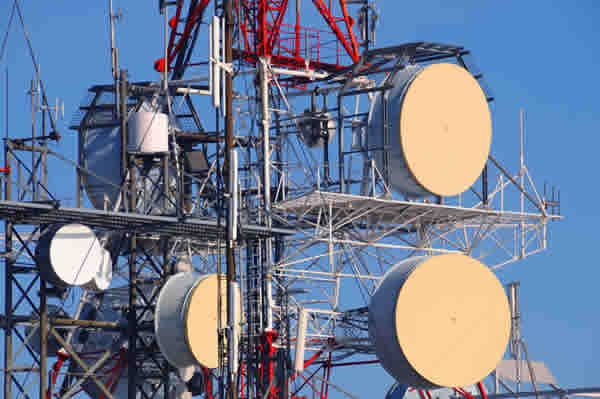
Much of the infrastructure supporting the digital economy remains invisible to the average smartphone user. Towers stand across the country, fibre runs alongside roads, data centres process information, international cables connect Nigeria to the rest of the world and engineers maintain the networks that make digital services possible.
At the eWorld Forum, Sylva Ifedigbo, Director of Corporate Communications at IHS Nigeria, highlighted this often overlooked layer of the digital economy. According to him, IHS Nigeria operates approximately 16,000 towers and more than 15,000 route kilometres of fibre optic cable, supporting mobile network operators and helping extend connectivity to urban and rural communities.
That infrastructure has also become critical to the wider economy. A fibre cut can disrupt financial transactions. A damaged tower can affect mobile banking. Poor connectivity can interrupt education, business activity and increasingly digital government and healthcare services.
Maida warned that fibre cuts, vandalism, theft and other infrastructure damage threaten not just telecommunications operators but the wider economy. In 2024, telecommunications assets and infrastructure were designated Critical National Information Infrastructure, making their protection a shared responsibility involving government, regulators, operators, security agencies and communities.
The implication is clear: telecommunications is no longer a standalone sector. It is woven into virtually every part of the economy. The next chapter, therefore, must be about productivity.
Nigeria has spent the first 25 years of GSM building a connected population. The next 25 years must focus on what that connectivity produces. That means more businesses created through digital platforms, more technology-enabled jobs, more efficient public services, more productive farmers, digitally capable students, innovative young Nigerians and globally competitive businesses.
The real economic dividend of telecommunications may not ultimately be the number of SIM cards or smartphones. It is the value created because those devices are connected.
And just as Nigeria begins to fully appreciate the economic consequences of GSM, another technological shift is accelerating. Artificial intelligence, cloud computing, the Internet of Things and non-terrestrial networks are opening a new frontier. AI could transform network design, optimisation, predictive maintenance and cybersecurity, while Nigerian businesses and young innovators face the larger question of what they can build with these technologies.
The 25th anniversary of GSM is therefore both a celebration and a transition point. Nigeria has moved from approximately 400,000 connected telephone lines to more than 157 million GSM subscriptions reported by the NCC in July 2026.
The question now is what the country wants its digital economy to look like when GSM turns 50 in 2051.
The vision articulated by Maida is of a Nigeria where unconnected communities are brought online, broadband is genuinely accessible, infrastructure is world class, innovation flourishes and consumers are protected without discouraging investment.
Achieving that vision will require regulators, investors, operators, infrastructure companies, technology businesses, government agencies, schools, communities and consumers to work together.
Twenty-five years ago, Nigerians queued to buy SIM cards. Today, Nigerians build businesses on smartphones. That contrast captures the extraordinary scale of the GSM revolution, but it also points to the unfinished work.
The first 25 years were fundamentally about access. The next 25 must be about impact.
If Nigeria can make connectivity more affordable, reliable, inclusive and productive, the enduring legacy of GSM may not simply be that it connected the country. It may be that connectivity helped Nigerians create businesses, improve productivity, innovate and access opportunities that were once beyond reach.
Ultimately, the greatest dividend of the GSM revolution may not be the mobile phone itself, but what millions of Nigerians are able to do because they have one.