


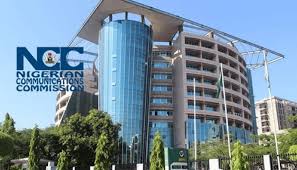
Nigeria’s ambition to build a $1 trillion economy hinges entirely on robust digital connectivity, yet the country’s fixed fibre broadband remains critically underdeveloped. Speaking at the Association of Telecommunications Companies of Nigeria (ATCON) High-Level Industry Forum in Lagos, Dr. Aminu Maida, the Executive Vice Chairman of the Nigerian Communications Commission (NCC), issued a stark warning that Nigeria must aggressively accelerate its Fibre-to-the-Home (FTTH) deployment to power the rapidly growing demands of artificial intelligence, cloud computing, and digital business.

The current infrastructure landscape highlights a massive gap between Nigeria and the rest of the world. The country currently counts only about 265,000 active FTTH subscriptions, leaving its broadband penetration level well below the African average of 2.5 per cent, and lagging drastically behind the 47% average seen in more mature global markets. Rather than viewing this low base as a failure, Dr. Maida urged stakeholders to treat it as a massive market opportunity that underscores the urgent need for a more sustainable, widespread network expansion.
To spark fresh investment and lower consumer costs, the NCC is launching a Wholesale Fixed Broadband Market Assessment. This initiative will evaluate market competition, promote infrastructure sharing, and enforce open-access models. Furthermore, the regulator is cracking down on substandard installation practices, warning that poor craftsmanship and cheap materials compromise network resilience and drive up long-term maintenance costs.
However, the biggest roadblock to a fully connected Nigeria remains state-level bureaucracy, particularly regarding Right of Way (RoW) approvals. Excessive fees and sluggish approval timelines continue to stall network rollouts. While 13 states have completely waived RoW charges and 16 others have adopted the federally recommended rate of ₦145 per linear metre, the NCC is actively pressuring the remaining states to eliminate these barriers. To improve transparency for investors, the commission has launched an Ease of Doing Business Portal to track state-by-state charges and approval data.
Ultimately, the NCC argues that digital infrastructure must be treated as a basic public utility. Dr. Maida called on urban planners and property developers to integrate telecommunications infrastructure into the blueprints of new residential and commercial developments from day one. Just as modern developments systematically plan for electricity, water, and drainage, they must also plan for fibre connectivity to reduce deployment costs, speed up service activation, and secure Nigeria’s position as a leading African digital economy.

