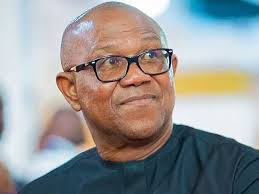
Peter Obi, former Labour Party presidential candidate, has strongly criticised the Federal Government over the approval of a nearly ₦8 trillion debt write-off in favour of the Nigerian National Petroleum Company Limited (NNPC Ltd), describing the move as a troubling sign of fiscal recklessness.

In a post on X (formerly Twitter) on Wednesday, Obi faulted President Bola Tinubu’s decision to cancel a substantial portion of debts owed by NNPC Ltd to the Federation Account, despite unresolved audit concerns and worsening economic hardship across the country.
Last month, President Tinubu approved the write-off of about $1.42 billion and ₦5.57 trillion, amounting to roughly ₦8 trillion, in legacy debts accumulated by NNPC Ltd up to December 31, 2024.
Reacting to the development, Obi said the decision sends the wrong signal at a time when Nigerians are being asked to make painful economic sacrifices.
“Financial recklessness is increasingly becoming normalised in our country,” he said.
According to Obi, the debt forgiveness was granted to a company that recently declared profits and claimed it had “turned a new leaf,” yet remains entangled in serious audit investigations.
“This is the same agency facing audit queries over an alleged failure to account for ₦210 trillion,” he noted.
Obi stressed that the amount under audit scrutiny far exceeds Nigeria’s combined federal budgets over several years.
He cited official figures showing that Nigeria’s budgets stood at about ₦21.83 trillion in 2023, ₦43.56 trillion in 2024, ₦54.99 trillion in 2025, and an estimated ₦58.18 trillion for 2026, totalling approximately ₦178.56 trillion.
“Nigerians are still waiting for the outcome of the National Assembly’s investigation into these missing trillions,” Obi said.
He added that NNPC remains under scrutiny for trillions of naira reportedly spent on non-functional refineries, making the debt write-off even more concerning.
Obi argued that the debt cancellation comes at a time when Nigerians are struggling with rising living costs following the removal of fuel and electricity subsidies, without corresponding improvements in welfare.
“Nigerians, already enduring severe hardship, are now confronted with this unexplained debt forgiveness,” he said.
He warned that the nearly ₦8 trillion write-off would effectively replace revenue now being sought through what he described as unfair taxation.
The former Anambra State governor said the funds could have been better deployed to critical sectors of the economy.
He pointed out that the amount exceeds the ₦7.1 trillion combined allocation to education, health and agriculture in the 2025 Federal Budget.
“In practical terms, this money alone could fully fund key development sectors and lift millions of Nigerians out of poverty,” Obi said.
The debt write-off was documented in a report by the Nigerian Upstream Petroleum Regulatory Commission (NUPRC) titled “Report of October 2025 Revenue Collection Presented at the Federation Account Allocation Committee Meeting Held on 18th November 2025.”
The directive clears NNPC Ltd’s legacy debts accumulated up to December 31, 2024, while liabilities arising from 2025 operations remain subject to ongoing monitoring.