

BY BOLUWAJI ONABOLU
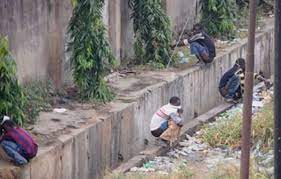
Lagos state’s recent imprisonment of 13 youths for three months for open defecation and urination in Agege and Alimosho is not just misguided—it’s self-defeating and unjust. While the government’s zeal to keep Lagos clean is understandable, criminalising a biological necessity in the absence of public toilets exposes systemic governance failures and deepens inequality. Instead of imprisoning citizens for the state’s lapses, Lagos and other Nigerian states must adopt sustainable, rights-based solutions that address the root causes of open defecation.
Prison for poo is a case of a broken system punishing the poor. Nigeria’s sanitation crisis is stark. The Federal Government’s Clean Nigeria: Use a Toilet Campaign revised its initial target of ending open defecation by 2025 to 2030 due to slow progress. As of April 2024, only 142 of 774 (18%) Local Government Areas were certified open-defecation-free, and national access to basic sanitation remains below 50 per cent (WHO/UNICEF JMP, 2024).
Imprisoning urban poor residents, particularly in areas like Alimosho and Agege, where public toilets are scarce, punishes people for conditions created by the state. In Lagos, only 11 per cent of public places, 36 per cent of schools, 29 per cent of health care facilities have access to basic WASH services. According to WHO/JMP (2024), the poorest Nigerians are twenty-one times less likely to have basic WASH facilities than the richest. These statistics reveal a systemic failure, not individual negligence. Ironically, prisons themselves are notorious for poor sanitation; imprisoning these youths effectively sentences them to practising open defecation for three months. This approach does nothing to advance public health; rather, it perpetuates the very problem it claims to solve.
Open defecation is undeniably harmful. Beyond outbreaks of cholera and typhoid, repeated sanitation-related diarrhoea leads to environmental enteropathy, a gut condition that impairs nutrient absorption. Poor sanitation with its attendant diarrhoeal episodes impedes brain development in children, reduces cognitive capacity and the future productivity of Nigeria’s labour force. Consequently, poor sanitation is not just a health issue; it’s a human capital crisis.
However, imprisonment does not address this. Behavioural science, including the Fishbein model and Health Belief Model, shows that sustained behaviour change requires awareness, enabling infrastructure, and reinforcement. Punitive enforcement without toilets, maintenance systems, or behaviour change communication is ineffective and impedes progress towards ending open defecation. Where are Lagos’s clean, accessible, and well-maintained gender-sensitive public toilets in markets and motor parks, or must these imprisoned men and others like them build their own public toilets?
Is it not hypocritical for the government to punish citizens for its own failures? Lagos state is currently unable to ensure a seamless transition between the generation of faeces and its collection, transportation, treatment and safe disposal. Consequently, a significant proportion of human faeces generated daily by Lagos State’s over 20 million residents ends up untreated, discharged into drains, water bodies, soakaways, or poorly constructed septic tanks that merely contain waste rather than treat it. In Oyo State, an assessment that the author conducted on behalf of UNICEF revealed that less than 1% of human faeces reach a sewage or faecal sludge treatment facility; the rest is disposed of indiscriminately in the environment.
This raises a fundamental question of justice: Should a system that pollutes the environment at scale imprison individuals for a proportionally much smaller offence?
Clearly, criminalising survival behaviour while ignoring structural sanitation failures amounts to selective enforcement that obscures institutional responsibility. Furthermore, Governments that favour imprisonment as a sanitation deterrent over other methods risk becoming greater culprits than the individuals they prosecute. It is not contested that Environmental Health Officers are empowered under public health laws to enforce sanitation standards, but progress matters more than punishment.
Punishments for open defecation must not negate the human rights and dignity of the offenders nor neglect their dignity. Access to water and sanitation is a recognised human right (UN Resolution 64/292). While citizens are responsible for toilets in their homes, governments are obligated to provide sanitation in public spaces, schools, markets, health facilities, motor parks, prisons, tertiary institutions, and IDP camps. Punitive imprisonment approaches disproportionately harm women, girls, persons with disabilities, informal workers, and the urban poor. For women and girls, the lack of toilets heightens risks of harassment, violence, and health complications, while imprisoning youth further entrenches poverty, unemployment, and social exclusion, outcomes that undermine Lagos State’s development goals.
Imprisoning residents for open defecation in settings that lack accessible, clean toilets and water erodes trust and public cooperation. Ending open defecation requires partnership with community development associations, market women, transport unions, landlords, and school management committees. Imprisonment pits citizens against the government and against Environmental Health Officers. A UNICEF-commissioned assessment conducted in Oyo State by the author also revealed that Environmental Health Officers increasingly require security agent escorts on field inspections due to community hostility, which is further evidence that heavy-handed enforcement breeds resistance, not compliance. In essence, fear-based enforcement erodes trust, weakens compliance, and delays progress toward open-defecation-free status.
There is a smarter, fairer way forward; reframe enforcement to support compliance rather than criminalising survival. Bearing in mind the objectives of the Government’s Clean Nigeria Campaign, more effective alternatives would be replacing imprisonment with community service and active participation in WASH campaigns, scaling up public toilets in markets, transport hubs, and high-density areas through public-private partnerships, and creating green jobs for youth to build, operate, and maintain sanitation facilities in public places and institutions. Investing in private sector partnerships to apply circular economy approaches, which convert faecal waste into energy and agricultural nutrients, can also drive sustainable solutions. Additionally, sustained behaviour change communication and two-way engagement must be prioritised, alongside strengthening operation and maintenance systems rather than merely delivering infrastructure.
I call on the following groups to take the right actions: Lagos State Government to release these young men. While acknowledging your commitment to environmental cleanliness, imprisoning citizens for open defecation is unjust and counterproductive. Release these young men and redirect efforts toward building at least 500 public toilets and functional water systems in the next six months.
Human rights lawyers: these imprisonments violate the fundamental human right to sanitation. Step forward, challenge these arrests, and join in advocating for their immediate release. Environmental Health Professionals: pair enforcement with human rights and infrastructure, championing policies that prioritise behaviour change, dignity, public toilets, and community engagement.
In conclusion, dignity, not detention, Lagos cannot jail its way to cleanliness. An open-defecation-free future will be achieved through infrastructure, inclusion, partnership, and dignity, not detention. The current approach is not only unjust; it is self-sabotage.
#SanitationIsARight #BuildToiletsNotPrisons #ReleaseTheYouths
Dr Boluwaji Onabolu writes in her capacity as an award-winning member of the Environmental Health Council of Nigeria; president, Network of Female Professionals in WASH; strategy advisor, WASHMATA Initiatives; and professor of practice, University of Johannesburg, South Africa.
