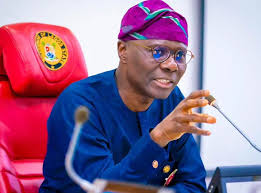

The Lagos State Government has approved over ₦140 billion for social protection programmes, reinforcing its commitment to inclusive growth and ensuring that vulnerable residents are not left behind in the state’s development journey.
Mrs. Olayinka Ojo, Permanent Secretary, Ministry of Economic Planning and Budget, disclosed this at the Lagos State Social Protection Partners Forum, describing the allocation as a strong signal of the government’s dedication to shared prosperity.
According to her, Governor Babajide Sanwo-Olu’s administration is driving an extensive social agenda through more than 20 social-focused Ministries, Departments and Agencies (MDAs) and over 90 targeted social interventions across the state. “Mr. Governor has emphasised his commitment to positively impacting the lives of Lagosians, with over ₦140 billion committed to social protection initiatives,” Ojo said.
Mrs. Ojo explained that the funding is aimed at building a coordinated and data-driven social protection system that reaches vulnerable populations across all local governments and LCDAs.
She noted that Lagos has made significant progress in establishing frameworks to support the poor and vulnerable, describing the forum as “a major milestone in the state’s commitment to shared prosperity and poverty reduction.”
The Lagos State Social Protection Policy, approved in 2020, focuses on improving livelihoods, health outcomes, education, gender equality, youth empowerment, disability inclusion, and overall human capital development. Implementation is coordinated by the Social Protection Coordinating Department, which serves as the secretariat for 22 MDAs working through a technical working group.
Ojo said Lagos remains the only state in Nigeria with a dedicated Social Protection Coordinating Department, stressing that the government has gone beyond federal minimum standards by investing state-generated revenue directly into residents’ welfare.
She revealed that the state is developing an advanced data management system that combines geospatial mapping with community-level engagement to accurately identify vulnerable populations. “We are not just sharing prosperity; we are identifying where the vulnerable are and ensuring inclusion and empowerment, especially for our youth,” she said.
In 2025, the state plans to deepen integration of its social register by working closely with community leaders, CDA chairmen, CDC coordinators, and market associations.
UN Women Country Representative, Beatrice Eyong, commended Lagos for prioritising inclusive and gender-responsive social protection, noting that fewer than one in ten Nigerians are covered by any form of social protection.
She highlighted that women are disproportionately affected by poverty due to limited access to legal, land, and social insurance rights, citing National Bureau of Statistics data showing that over 70 per cent of working women live in poverty-impacted states. “Without deliberate and inclusive intervention, poverty will continue to deepen,” Eyong warned.
Similarly, UNICEF Social Policy Manager, Muhammad Okorie, praised Lagos for its long-term approach to human capital development. “When you think long-term, you are thinking about the next generation that will drive economic growth,” he said, adding that Lagos is already planning beyond 2026.
Also speaking, Executive Secretary of the Lagos State Scholarship Board, Mrs. Daranijo, emphasised collaboration in ensuring that financial hardship does not deny children access to education.
She said the board works closely with communities to verify family circumstances and support deserving students.
The forum also featured the presentation of the Lagos State Social Protection Report 2025, titled “Leaving No One Behind: Tracking Social Protection Coverage and Vulnerability.”