It’s lazy reporting that headlines with “₦34.5 trillion was missing from the Federation account between 2023 and 2025.”

Reality is that it did not simply “go missing.” Nigeria did not wake up and find that money had vanished into thin air.
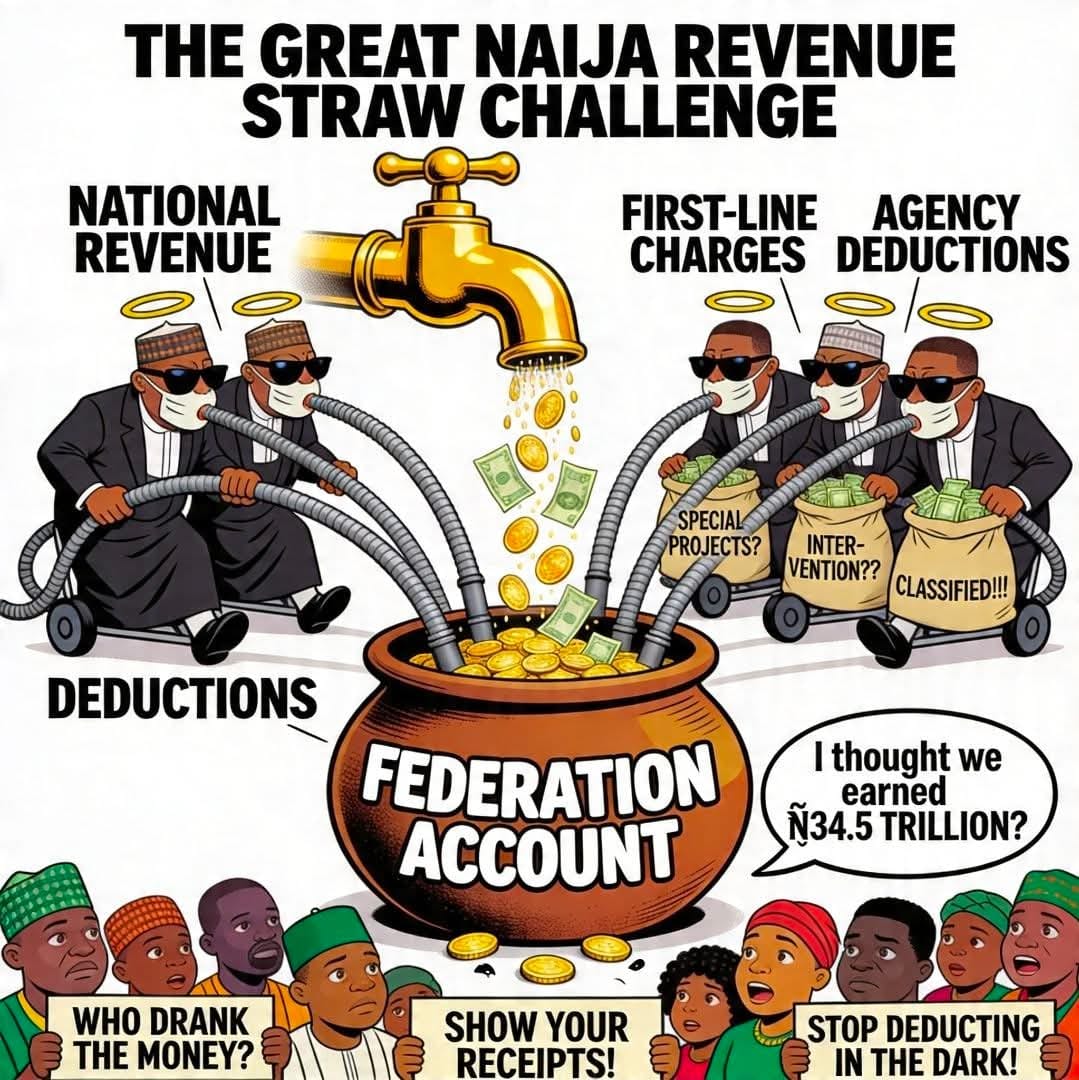
What the World Bank stated is more disturbing. We earned huge revenues, but before that money could be shared through the Federation Account, massive deductions of more than N34 trillion were taken out first. That’s crazy!
The real issue is not the disappearance of our money. The real issue is a system that allows enormous sums to be removed before Nigerians can clearly see, question, and track where the money went.
That is why we should be asking harder questions.
If more than ₦34 trillion was deducted between 2023 and 2025, where exactly did it go? What was it used for? Who approved each deduction? Who checked whether those deductions were lawful, necessary, and fair to the federal, state, and local governments that depend on Federation Account revenue?
This is where the anger should be with the current government. The problem is not just the amount. The problem is the lack of clarity around it.
Once money is taken off the top before distribution, the public deserves a transparent and simple explanation, not technical jargon that hides accountability.
Nigerians should be able to see clearly who received what, under what authority, for what purpose, and with what result.
The World Bank’s concern is clear. It pointed to a system of first-line charges, agency deductions, refunds, interventions, and other claims that kept eating into the final amount available for sharing.
In simple language, the more revenue that came in, the more the deductions. That turns what should be a public finance process into something that looks confusing, opaque, and hard for ordinary citizens to follow. It’s shady!
If these deductions were legitimate, the government should publish the amounts, legal basis, approval process, beneficiaries, audited use of funds, and measurable value delivered so we can measure them against the funds taken.
If any part of them cannot stand public scrutiny, then we have every right to demand answers, reforms, and consequences.
So, the money was not “missing” in the careless way many headlines suggested.
But that does not make the matter less serious. Money does not need to disappear to be wrongly handled. It only needs to be deducted in ways the public cannot clearly see, verify, or challenge.
That is the real question before government leadership and us.
Who authorised these deductions? Where did the money end up? What did the country gain from it? And why did citizens have to hear the scale of it from the World Bank instead of from their own government?
It makes one wonder if we really have a government that believes in transparency.
@Aderemi Ogunpitan