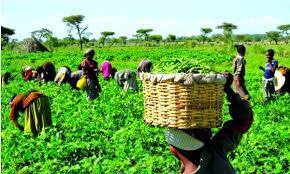
The Federal Government has intensified efforts to fast-track the implementation of the Special Agro-Industrial Processing Zones (SAPZ) Programme, an ambitious agricultural development initiative expected to create more than 500,000 direct and indirect jobs in each participating location while significantly reducing post-harvest losses across Nigeria.

The renewed commitment was reaffirmed during the SAPZ Mid-Term Review Workshop held in Abuja, where government officials, development partners, and stakeholders assessed progress made under the programme’s first phase and discussed strategies for addressing implementation challenges.
Speaking at the workshop, Dr. Marcus Ogunbiyi, Permanent Secretary of the Federal Ministry of Agriculture and Food Security, described the SAPZ Programme as a key pillar of Nigeria’s agricultural transformation agenda and a critical component of President Bola Tinubu’s Renewed Hope programme.
According to him, the initiative is designed not only to boost agricultural production but also to transform agriculture into a competitive, value-driven sector capable of generating jobs, strengthening food security, stimulating industrial growth, and increasing export earnings.
“The programme is designed to create integrated agro-industrial hubs that connect farmers to processors, storage facilities, logistics networks, and markets within designated economic zones,” Ogunbiyi said.
Ogunbiyi explained that the SAPZ Programme was conceived to address persistent bottlenecks within Nigeria’s agricultural value chains, including inadequate processing facilities, poor storage infrastructure, limited access to markets, weak value addition, and high post-harvest losses.
The first phase of the programme is currently being implemented across seven states, Kano, Kaduna, Imo, Cross River, Kwara, Ogun, and Oyo, as well as the Federal Capital Territory (FCT).
He disclosed that the initiative is projected to generate approximately 500,000 direct and indirect jobs in each project location, alongside about 2.5 million temporary jobs linked to infrastructure development and related economic activities.
The programme is also expected to significantly improve agricultural productivity, raising output levels from the current 5–10 per cent range to between 50 and 100 per cent in targeted value chains. In addition, post-harvest losses, currently estimated at about 45 per cent, are expected to decline to around 20 per cent.
Despite the programme’s lofty ambitions, Ogunbiyi acknowledged that implementation has faced several hurdles, including slow fund disbursement, procurement delays, prolonged approval processes, and sluggish infrastructure development in some participating states.
He urged stakeholders to identify and address the factors slowing progress to ensure the programme achieves its objectives within the stipulated timeframe.
“We must identify the factors slowing implementation, address emerging risks, and ensure that the programme delivers on its promises within the stipulated timeframe,” he stated.
Ogunbiyi also revealed that more than 100 agribusiness enterprises and entrepreneurs recently received the SON/ARSO Quality Mark, while over 178 processed agricultural products secured African Quality Standard Certification.
According to him, the certifications will enable Nigerian agribusinesses to access markets across Africa under the African Continental Free Trade Area (AfCFTA), strengthening the country’s export competitiveness.