


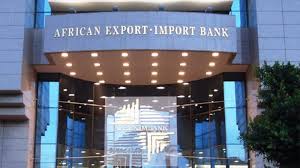
African Export-Import Bank posted a profit of N1.5 trillion ($1.15 billion) for 2025, up from N1.3 trillion ($973.5 million) in 2024, reflecting stronger earnings and sustained growth in its lending operations.

The performance was underpinned by rising interest income, which climbed to about N4.2 trillion, alongside a steady expansion in loans and advances, now estimated at over N45 trillion.
The bank’s balance sheet strengthened significantly during the year, with total assets rising by 19.9 per cent to N56.7 trillion.
Loans and advances increased to N45.7 trillion from N38.9 trillion, highlighting continued support for trade and infrastructure financing across Africa and the Caribbean.
Most of the loan portfolio remained healthy, with Stage 1 (performing) loans accounting for the bulk at N44.3 trillion. Stage 2 loans declined to N1.0 trillion, indicating improved credit quality, while Stage 3 (impaired) loans rose slightly to N76.8 billion.
Non-interest income also improved, with net fees and commissions rising to N252 billion from N232 billion.
Additional support came from other operating income (N101.3 billion), exchange adjustments (N32 billion), and fair value gains (N70 billion), helping to offset rising operating costs.
Total liabilities grew to about N45 trillion, driven largely by borrowings of N21 trillion used to support lending expansion, while shareholders’ funds increased to N11.2 trillion.
Despite concerns raised by rating agencies, Afreximbank raised over N1.07 trillion (about $800 million) from international markets in 2025 through Samurai and Panda bonds issued in Japan and China.
This came amid a high-profile dispute with Fitch Ratings, which downgraded the bank in 2025 over concerns about its sovereign loan exposure. The bank later ended its rating relationship with Fitch in early 2026.
Looking ahead, Afreximbank said it remains well-positioned to capitalise on opportunities across Africa and the Caribbean despite global headwinds such as inflation, tighter financial conditions, and geopolitical tensions.
The bank’s strong financial capacity, expanding partnerships, and focus on trade finance are expected to support further growth in 2026.
It also maintained solid shareholder returns, with dividends of about N466 billion and a special payout of N67 billion, underscoring confidence in its long-term outlook.

