


Nigeria is ramping up its health sector funding, with the Federal Government committing $346 million in co-financing for HIV, tuberculosis, and malaria programmes in 2026 as part of efforts to strengthen the country’s disease response systems.

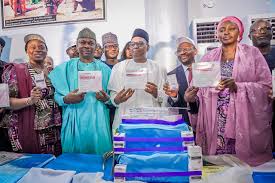
The disclosure was made by Muhammad Ali Pate, Coordinating Minister of Health and Social Welfare, during the national launch of Lenacapavir, a long-acting injectable for HIV prevention, in Abuja. The funding, approved by Bola Ahmed Tinubu, is expected to be captured in the 2026 national budget.
Pate said the allocation reflects Nigeria’s growing shift toward domestic financing of critical health programmes amid tightening global funding conditions. According to him, the funds will support essential areas such as procurement of medical commodities, laboratory surveillance, reagents, expansion of primary healthcare services, and financial protection for citizens.
He noted that while international partnerships have supported Nigeria’s health gains over the past two decades, the country must now adapt to a changing global funding landscape by strengthening internal capacity.
“The global space is changing… financing has become limited globally,” Pate said, stressing the need for Nigeria to rethink its funding model and reduce dependence on external aid.
The government’s long-term target is to fully fund priority disease programmes locally by 2030. Currently, over 90 percent of Nigeria’s health spending is already domestically sourced, with external funding playing a supporting role.
Providing further insight, Minister of State for Health Iziaq Salako said Nigeria has made measurable progress in its HIV response. He revealed that 93 per cent of people living with HIV are aware of their status, 99 per cent of diagnosed individuals are receiving treatment, and 95 per cent of those on treatment have achieved viral suppression.
He also highlighted improvements in preventing mother-to-child transmission, which has risen significantly from 33 per cent in 2023 to nearly 70 per cent in 2025.
Health officials described the introduction of Lenacapavir as a major breakthrough in HIV prevention, offering a twice-yearly injectable alternative to daily oral medication, particularly for high-risk populations.
The renewed funding commitment underscores Nigeria’s push to build a more resilient and self-sustaining healthcare system, even as global health financing becomes increasingly constrained.

