


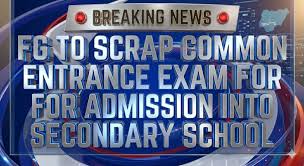
Nigeria’s basic education system is set for a major overhaul as Minister of Education, Tunji Alausa, has announced plans to abolish the National Common Entrance Examination and replace it with a centralised learner tracking system.

The proposed reform will introduce a Learner Identification Number (LIN) for every pupil, enabling authorities to monitor academic progress from primary school through secondary education, regardless of school transfers.
Speaking during an interactive session with journalists in Lagos, Alausa said the move is aimed at improving access to education and addressing gaps in student progression across the country.
Under the new framework, the long-standing Common Entrance Examination will be phased out and replaced with continuous assessment.
According to the minister, pupils will be evaluated based on their academic performance from primary one, with records carried along as they move between schools.
“This system will ensure that a child’s progress is tracked over time, rather than relying on a one-off examination,” he explained.
The shift is expected to reduce the pressure associated with high-stakes exams while offering a more holistic view of student performance.
Alausa raised concerns over the large number of pupils who fail to transition from primary to junior secondary school.
Nigeria currently has over 50,000 public primary schools with more than 23 million pupils. However, only a little over 3 million proceed to junior secondary school within the public system.
The minister questioned the whereabouts of the remaining pupils, noting that private schools cannot account for such a significant gap.
Describing the situation as a major access challenge, Alausa called on state governments to expand educational infrastructure and create more spaces in secondary schools.
He disclosed that discussions are already ongoing with the Nigeria Governors’ Forum to address the shortfall.
“The issue is simply a lack of access. We need to build more schools and accommodate more students,” he said.
A key component of the reform is the deployment of the LIN system to track enrolment and retention in real time.
With this system, education authorities will be able to identify students who drop out and understand the reasons behind their exit from school.
“If a child is expected to be in JSS1 and is not there, we will know why,” the minister noted, adding that the data will guide targeted interventions.
In addition, the government plans to revive the National Home-Grown School Feeding Programme to boost school enrolment and retention.
The programme may be moved under the Federal Ministry of Education to strengthen monitoring and improve accountability.
The proposed reforms signal a shift towards a more data-driven and inclusive education system, with a focus on tracking student outcomes and closing the transition gap between primary and secondary education in Nigeria.

