


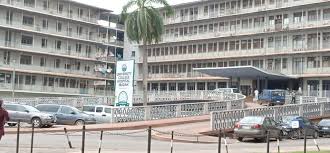
Healthcare services at the University College Hospital (UCH), Ibadan, Nigeria’s first teaching hospital established in 1948, have been severely disrupted by a prolonged power outage and persistent water shortages, pushing the facility to the brink of collapse.

The crisis has triggered a strike by health workers, who say deteriorating conditions are undermining patient care and putting lives at risk. Patients are facing delays and disruptions as medical staff struggle to operate in an environment where electricity and water, two essential resources for healthcare delivery, are unreliable.
According to Uthman Adedeji, president of the Association of Resident Doctors (ARD), UCH chapter, the lack of water has forced some critically ill patients to leave the hospital because basic hygiene cannot be maintained.
“Some patients suffering from chronic diarrhoea have had to leave because there is no water to clean them up after passing stool,” he said.
Health workers say the situation has forced staff and patients to adopt extreme coping measures. Many now bathe with bowls instead of using bathrooms to conserve limited water supplies.
Poor electricity supply has further compounded the problem. Medical equipment that depends on stable power is frequently shut down, while some drugs that require refrigeration have been wasted.
Daniel Adejobi, Public Relations Officer of the Nigerian Union of Allied Health Workers (NAUPHW), UCH chapter, said the crisis has led to equipment failure and resource losses.
“Most of the machines we use depend on power, and some drugs must be stored at specific temperatures. With the current situation, many go bad, leading to waste,” he said.
The conditions have also created dangerous working environments for healthcare professionals. Ventilators malfunction, operating rooms become unbearably hot, and poor lighting increases the risk of accidents.
Adedeji revealed that a surgeon recently collapsed during an operation due to heat stress, while other workers have suffered needle injuries while administering injections in darkness, exposing them to infections such as HIV and Lassa fever.
Medical training at the institution has also been affected. A medical student who spoke anonymously said major surgical procedures are often postponed due to unreliable electricity, limiting learning opportunities for trainees.
“We are not learning what we should because many major surgeries are stalled,” the student said, adding that trainees often queue for hours to access water.
The crisis has also slashed the hospital’s internally generated revenue. Weekly surgeries have reportedly dropped from about 300 to fewer than 20, while diagnostic equipment such as MRI and CT scan machines remain largely idle due to unstable power supply.
Laboratory services have also been scaled down because water is required for preparing reagents and cleaning equipment.
The situation echoes an earlier crisis when the hospital reportedly spent 102 days in total darkness between November 2024 and February 2025 following disputes over electricity tariffs and debts before federal government intervention.
Health workers say electricity supply to the hospital is still rationed to about three hours daily, despite the facility paying premium Band A electricity tariffs of about N256 per unit.
The worsening conditions have prompted a five-day warning strike by unions under the Council of UCH Union Leaders (CUUL), who warn that the action may escalate if the issues remain unresolved.
Union leaders are now calling on the federal government and other stakeholders to urgently intervene, restore stable electricity and water supply, and resolve the internal disputes affecting the hospital’s operations.
“We cannot continue like this,” Adejobi said. “Stakeholders must act quickly to restore sanity and create an enabling environment for healthcare delivery.”
