
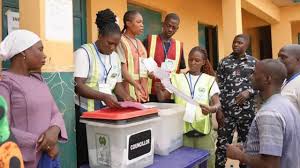
The Federal Capital Territory (FCT) council elections, conducted yesterday by the Independent National Electoral Commission (INEC), exposed systemic weaknesses that could become more dangerous in the 2027 general elections if left unaddressed.

While local council polls typically attract lower participation, the scale and nature of the shortcomings, low turnout, vote-buying, logistical lapses and voter register confusion point to deeper structural and political risks.
Low Voter Turnout: A Warning Signal
Across multiple polling units, turnout was strikingly poor. In some centres, election officials and security personnel outnumbered voters. In others, only a handful voted despite thousands being registered.
This trend signals:
- Erosion of public trust in the electoral process
- Growing voter apathy driven by economic hardship and unmet expectations
- Weak mobilisation by political parties
If replicated in 2027, low turnout could undermine the legitimacy of national outcomes, particularly in closely contested presidential or gubernatorial races.
The concern expressed by Peter Obi, the presidential candidate of the Labour Party in the 2023 general elections, underscores that even political stakeholders recognise the reputational risk posed by disengaged electorates.
Vote-Buying: Normalisation of Electoral Inducement
Reports of payments ranging from ₦500 to ₦3,000 in exchange for votes reflect the continued monetisation of Nigeria’s democracy.
More troubling was the apparent expectation among some voters that financial incentives were a precondition for participation. This suggests:
- Deep economic vulnerability influencing civic behaviour
- Weak enforcement of electoral offences
- Cultural normalisation of transactional politics
In a high-stakes 2027 contest, vote-buying could scale up significantly, distorting electoral outcomes and further entrenching patronage politics.
Logistical Gaps and Operational Inefficiencies
Late arrival of officials, missing materials, inadequate furniture, and delayed commencement of voting were recurring themes. Although biometric verification devices (BVAS) functioned with facial recognition in some cases, technical inconsistencies persist.
For a local election, such issues may be containable. But in a nationwide general election involving tens of millions of voters, logistical lapses could:
- Create flashpoints for unrest
- Fuel conspiracy narratives
- Trigger legal disputes over credibility
INEC’s operational readiness for 2027 will be judged against these early warning signs.
Voter Register Confusion and Polling Unit Relocation
Several voters could not locate their names due to redistribution of polling units. While rational from a congestion-management perspective, poor communication compounded confusion.
For 2027, this raises critical questions:
- Is the voter database adequately cleaned and synchronised?
- Are relocation notices reaching affected voters early enough?
- Is digital verification sufficiently accessible?
Failure in these areas could disenfranchise thousands, especially in urban centres.
Political Party Internal Democracy and Candidate Legitimacy
Complaints about candidate imposition suggest internal party tensions may have dampened turnout. In national elections, unresolved internal disputes often translate into:
- Protest voting
- Sabotage from within party structures
- Parallel mobilisation structures
Weak internal democracy within parties remains a structural risk to credible national elections.
Broader Democratic Implications for 2027
The FCT election, though localised, acts as a stress test for the national system. Three broader implications stand out:
a. Legitimacy Risk:
Low participation in 2027 could weaken the moral authority of elected leaders.
b. Security Risk:
Where turnout is low and allegations high, post-election disputes become more volatile.
c. Institutional Trust:
INEC’s credibility depends not only on technology, but on logistics, communication and enforcement against malpractice.
What Must Change Before 2027
To prevent repetition at the national scale, stakeholders may need to prioritise:
- Early voter register audits and public verification drives
- Stronger prosecution of vote-buying offences
- Improved logistics planning and contingency deployment
- Clearer communication on polling unit changes
- Civic education campaigns to combat voter apathy
Conclusion: A Microcosm of National Risk
The FCT council elections reveal not a collapsed system, but a fragile one. Low turnout, inducement culture, operational delays and political dissatisfaction are warning indicators.
If these patterns persist, the 2027 general elections may face heightened legitimacy challenges, not necessarily from technological failure, but from declining public confidence and structural complacency.
The FCT polls should therefore be treated less as a routine local exercise and more as an early diagnostic report on the health of Nigeria’s electoral democracy.