


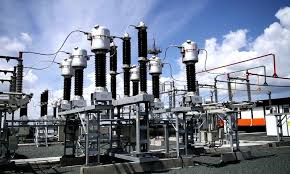
Nigeria’s worsening electricity crisis has been starkly exposed by new data showing that nearly two-thirds of the country’s power plants were idle in January 2026, even as homes and businesses continue to grapple with persistent blackouts.

Figures released by the Nigerian Electricity Regulatory Commission (NERC) reveal that grid-connected power plants with a combined installed capacity of 13,625 megawatts (MW) generated an average of just 4,421MW, highlighting severe underutilisation across the sector.
While plants that were operational recorded a relatively strong load factor, overall performance was dragged down by a plant availability factor of just 36 per cent, meaning the bulk of Nigeria’s generation infrastructure was unavailable for use during the month.
In total, only 4,901MW was available for dispatch—less than half of what could be produced if all plants were functional.
The data underscores a power sector constrained not by lack of infrastructure, but by operational breakdowns, including gas supply disruptions, poor maintenance, and transmission bottlenecks, despite years of reforms and billions of dollars in investment. “This is a classic case of resources lying fallow,” said Chinedu Okafor, an energy analyst at Lagos-based consultancy Power Metrics Africa. “Nigeria doesn’t urgently need more power plants; it needs to fix the ones it already has.”
Performance across generating stations varied widely. Ihovbor_2 recorded a 100 per cent availability factor, fully utilising its available capacity, though its installed base of 461MW is relatively small.
By contrast, Egbin_1, Nigeria’s largest thermal power plant with 1,320MW of installed capacity, operated at just 51 per cent availability, despite achieving a strong 95 per cent load factor when running.
Several major plants delivered little or no power during the month. Afam_1 (726MW) recorded only 7 per cent availability, while Alaoji_1 (500MW) and Ibom Power_1 (190MW) generated zero output throughout January.
Combined, these idle plants represent nearly 1,500MW of wasted capacity, enough to supply electricity to millions of households.
The economic consequences are significant. Erratic power supply continues to force businesses and households to depend heavily on diesel generators, sharply raising costs. The World Bank estimates that unreliable electricity costs Nigeria about $29 billion annually, roughly 2 per cent of GDP.
Gas supply shortages remain the biggest constraint, particularly for thermal plants that dominate Nigeria’s energy mix. Despite holding Africa’s largest natural gas reserves, the country struggles with pipeline vandalism, commercial disputes, and inadequate gas infrastructure. “The gas-to-power value chain remains fundamentally broken,” said Amina Bello, a former adviser to the Ministry of Power. “Without reliable fuel and the right commercial incentives, power plants simply cannot operate.”
Transmission constraints further compound the crisis. The Transmission Company of Nigeria (TCN) has acknowledged that the national grid can wheel only about 5,500MW, effectively capping generation even when plants are capable of producing more electricity.
The data comes amid growing pressure on the federal government to resolve the power crisis. President Bola Tinubu’s administration has pledged to raise electricity generation to 10,000MW by 2025, a target that now appears increasingly unlikely given current utilisation levels.
Recent reforms, including moves to decentralise electricity regulation and empower states, have offered some hope. However, progress has been slow, with financing gaps, gas supply challenges, and grid limitations still largely unresolved.
The January figures suggest that meaningful gains could be achieved without building new plants. Analysts note that raising plant availability to 60 per cent, still below global benchmarks, could add about 3,000MW to the grid, significantly easing Nigeria’s power deficit.

