
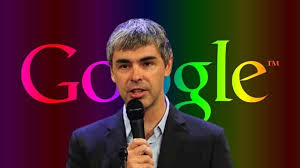

Larry Page, co-founder and board member of Alphabet Inc., has added an estimated $6.1 billion to his net worth following a rise in the technology giant’s share price.
According to the Forbes Billionaire Index, Page’s wealth is now estimated at $263.8 billion as of January 2026, reflecting investor optimism around Alphabet’s earnings outlook and long-term growth strategy.
Alphabet’s recent stock rally has been fuelled by strong growth in advertising revenue, continued expansion of its data centre infrastructure, and positive market sentiment around its artificial intelligence-driven ad products.
Analysts point to initiatives such as Smart Bidding Exploration, which improves ad placement efficiency and increases monetisation of search queries, as key drivers of revenue growth. Reflecting this confidence, Citizens Investment recently raised its price target for Alphabet shares to $385.
Alphabet has also strengthened its long-term growth outlook with plans to acquire Intersect, a U.S.-based data centre and energy infrastructure provider, for $4.75 billion. The deal is expected to boost the company’s renewable energy capacity and support the expanding computing demands of Google’s global operations.
Page co-founded Google in 1998 with fellow Stanford PhD student Sergey Brin, developing the PageRank algorithm that revolutionised online search. He served as Google’s CEO from 1997 to 2001 and again from 2011 to 2015, before becoming CEO of Alphabet following its restructuring.
Although Page and Brin stepped down from executive roles in 2019, Page remains a board member, controlling shareholder, and employee of Alphabet. Under his leadership, Google evolved into a global technology powerhouse, with products such as YouTube, Gmail, Google Maps, and Google Analytics.
Born in Lansing, Michigan, in 1973, Page grew up in a technology-focused household and began using computers from an early age. He earned degrees from the University of Michigan and Stanford University, where Google was conceived.
In its early days, the startup struggled for funding, relying on small contributions from professors. Its breakthrough came with a $100,000 seed cheque from one of Page and Brin’s academic mentors, an investment that would eventually help launch one of the world’s most valuable companies.