


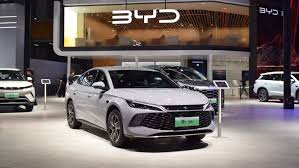
In 2011, Elon Musk, Tesla CEO, famously brushed off Chinese electric vehicle maker BYD as a serious rival. Fourteen years later, that assessment has been decisively overturned.
BYD has surpassed Tesla to become the world’s largest seller of electric vehicles, according to 2025 sales figures released this week by both companies.
The Chinese automaker announced on Thursday that it sold 2.26 million electric vehicles in 2025, a nearly 28 per cent increase from the previous year. Tesla, by contrast, reported on Friday that its global deliveries fell 8.6 per cent to about 1.6 million vehicles, marking the second consecutive year of declining sales and the steepest annual drop in the company’s history.
BYD achieved this milestone despite not selling its EVs in the United States, while China remains Tesla’s second-largest market.
Tesla’s struggles were particularly evident in the fourth quarter. The company delivered roughly 418,000 vehicles, down 15.6 per cent from the same period a year earlier. The decline was sharper than the previous quarter, which had seen record global sales as US buyers rushed to purchase EVs before a $7,500 federal tax credit expired on October 1.
Unlike most automakers, Tesla does not break down sales by region, reporting only global figures. However, company filings show that the US market accounts for nearly half of its revenue. Reports from other automakers are also expected to show weak US EV demand in the final months of 2025.
At its peak, Tesla’s sales were growing by nearly 50 per cent annually. That momentum faded in 2024, when the company recorded its first-ever annual decline, albeit a modest 1 per cent. The downturn deepened in 2025 as competition intensified from rivals such as BYD and legacy automakers, while backlash against Musk’s political activities alienated some consumers in the US and Europe.
Earlier in the year, protests were reported outside Tesla showrooms in parts of Europe and the United States, along with incidents of vandalism targeting Tesla vehicles and facilities.
The rush to beat the tax credit deadline boosted third-quarter sales but likely pulled forward purchases that might otherwise have occurred later in the year. To soften the impact of the incentive’s expiration, Tesla introduced lower-priced versions of its Model 3 and Model Y. While these models are about $5,000 cheaper than premium versions, they offer shorter driving ranges and fewer features.
BYD’s rise has come amid intense competition and price wars in China, the world’s largest auto market. The pressure has pushed the Shenzhen-based company to expand more aggressively overseas, although its low-price strategy has triggered regulatory scrutiny and new tariffs in some markets.
Overall growth at BYD has slowed. Total vehicle sales, including hybrids, rose to just over 4.6 million units in 2025, the weakest growth rate the company has recorded in five years. BYD also reported profit declines in both the second and third quarters of the year.
China’s auto market remains fiercely competitive, with about 150 car brands and more than 50 EV makers, according to HSBC research. Rivals such as Geely, fast-growing Leapmotor and newcomer Xiaomi, which launched its first EV only in 2024, have steadily chipped away at BYD’s dominance.
BYD’s market share fell to 29 per cent in the first 11 months of 2025, down from a peak of 35 per cent in 2023, according to the China Passenger Car Association. Over the same period, BYD’s sales declined by more than 5 per cent, while Geely’s surged nearly 90 per cent.
At a December investor meeting, BYD founder and CEO Wang Chuanfu attributed the slowdown to a narrowing technological edge and limited product differentiation. He said the company plans to unveil new technologies in the near future.
Meanwhile, Tesla’s shares rose 1.2 per cent in early Friday trading and finished 2025 up 18.6 per cent. Investors appear to be looking beyond weak vehicle sales, focusing instead on Musk’s ambitious plans for robotaxis and humanoid robots. However, Tesla’s robotaxi rollout has so far fallen short of expectations, operating only in Austin, Texas, and San Francisco, far from Musk’s earlier prediction that it would reach half of the US population by year’s end.


