

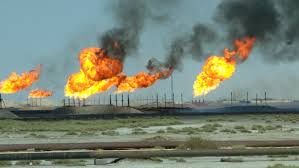
A Niger Delta-based organisation, Healthy Life Development Initiative (HELDi), is raising an urgent alarm over Nigeria’s staggering annual loss of over $500 million due to gas flaring. The group has sent a memorandum to the National Assembly (NASS) and other hydrocarbon industry regulators, warning that insufficient methane regulation could also expose Nigeria to 35 per cent carbon tariffs on its Liquefied Natural Gas (LNG) exports to the European Union by 2026.

In the memo, Dr. Mfon Utin, HELDi’s Programme Coordinator, outlined 11 urgent and actionable reforms aimed at closing legal, regulatory, and institutional loopholes in methane governance within Nigeria’s oil and gas sector.
HELDi cautioned that failure to act decisively by the first quarter of 2026 could trigger further divestment by international investors like BP and Eni, citing non-compliance with Environmental, Social, and Governance (ESG) standards. Such divestment, the memo warns, could lead to an annual loss of 300 billion cubic feet (bcf) of gas, enough to power a state the size of Lagos for 18 months – and jeopardize Nigeria’s commitment under the Global Methane Pledge.
Among the key risks highlighted is legal ambiguity regarding flare gas ownership between the Nigerian Upstream Petroleum Regulatory Commission (NUPRC) and the Nigerian Midstream and Downstream Petroleum Regulatory Authority (NMDPRA). This ambiguity, HELDi states, threatens regulatory coherence and increases the risk of litigation.
The organisation also criticized ineffective penalties for gas flaring. Current fines stand at a mere $0.12 per cubic meter (m³), significantly below international benchmarks of $1.80/m³ in the EU, effectively enabling continued non-compliance by operators.
HELDi, which collaborated with other non-state organisations to review Nigeria’s gas flare challenges, expressed alarm that new European regulations could catch Nigeria unprepared, leading to massive annual financial losses.
