By Elvis Eromosele

The collapse of climate negotiations in Antalya exposes a troubling contradiction in global climate diplomacy: governments recognise the urgency of the climate emergency, yet remain unwilling to confront the economic interests, political calculations and historical injustices standing in the way of meaningful action.
The world has a climate problem. Unfortunately, it also has a cooperation problem.
This contradiction was laid bare at COP31 in Antalya, Turkey, where days of intense negotiations ended without a consensus agreement. The collapse was particularly revealing because the disagreement was not over whether climate change was real, whether global temperatures were rising or whether urgent intervention was necessary. Governments could apparently agree on the scale of the danger. What they could not agree on was what to do about it.
At the heart of the breakdown was an increasingly familiar fault line in international climate diplomacy: fossil fuels. The proposed Antalya Pact failed to secure agreement partly because it did not explicitly commit countries to moving away from fossil fuels. For governments demanding stronger climate commitments, this was an unacceptable retreat from the position reached at COP28 in Dubai, which called for transitioning away from fossil fuels in energy systems.
For oil-producing countries, however, such language was a red line. The result was another demonstration of how economic interests, geopolitical rivalries and national priorities can overwhelm the collective responsibility to protect the planet.
But the failure of COP31 deserves more than another round of expressions of disappointment. It should provoke a more fundamental examination of the international climate process, its priorities and its relevance to the billions of people whose lives are already being disrupted by climate change.
There is something deeply troubling about a global climate conference struggling to agree on language addressing the principal driver of global warming.
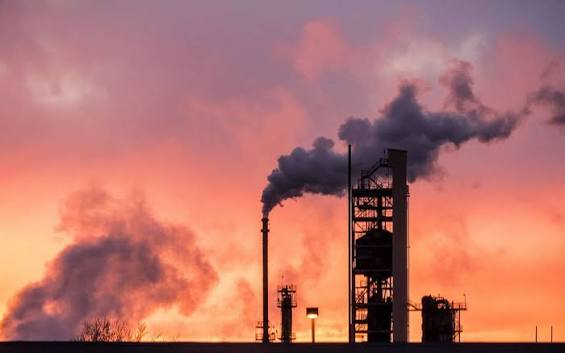
Fossil fuels remain central to global energy production, industrial development and transportation. Oil, gas and coal have powered economies, created industries and lifted millions out of poverty. Yet their continued combustion is also driving the accumulation of greenhouse gases responsible for global warming.
This creates a difficult but unavoidable question: how does the world move away from the energy sources on which much of its economic architecture still depends?
The position of oil-producing countries is not entirely without merit. Energy transitions cannot happen overnight, particularly in developing economies with growing populations, inadequate infrastructure and limited access to affordable alternatives. Russia’s warning that cutting oil and gas supplies before demand falls could produce shortages, higher prices and energy poverty reflects a legitimate concern about energy security.
But energy security cannot become a permanent justification for postponing climate action.
The more uncomfortable question is whether governments genuinely want an orderly transition or simply want to preserve existing economic arrangements for as long as possible. The distinction matters. A transition that is continually postponed is not a transition. It is an elaborate exercise in managing political expectations while the environmental consequences accumulate.
The absence of an official United States delegation at the Antalya negotiations was another troubling development. For years, the United States has been an influential participant in international climate diplomacy. Its absence under President Donald Trump’s administration reflects a wider retreat from multilateral climate cooperation.
For Africa, the failure of COP31 carries particular significance. The continent contributes a relatively small share of global historical greenhouse gas emissions but faces disproportionate exposure to climate risks.
Across the continent, changing rainfall patterns, droughts, flooding, desertification, coastal erosion and extreme temperatures threaten agriculture, livelihoods, infrastructure and public health.
Nigeria provides a compelling illustration. Flooding continues to threaten communities, destroy livelihoods and damage infrastructure. Farmers face increasingly unpredictable weather conditions. Coastal communities confront erosion and rising sea levels, while urban centres struggle with drainage, waste management and inadequate climate-resilient infrastructure.
Yet Africa’s climate challenge is not simply about surviving environmental damage. It is also about securing the resources to develop. Millions of Africans still lack reliable electricity. Industries require affordable and dependable energy. Governments need resources to build roads, hospitals, schools, irrigation systems and resilient infrastructure.
It is therefore understandable that African governments are reluctant to embrace climate policies that could constrain their development without providing credible alternatives.
The argument advanced by developing countries at COP31 about the inadequacy of climate finance deserves serious attention.
Why should countries that contributed relatively little to the historical accumulation of greenhouse gases carry a disproportionate financial burden in adapting to the consequences? And why should climate finance arrive largely in the form of loans that increase the debt obligations of countries already struggling with fiscal pressures?
Climate finance that deepens indebtedness risks defeating its own purpose.
Africa needs more than ambitious declarations and financial pledges. It needs accessible, predictable and affordable funding that supports adaptation, renewable energy, climate-resilient agriculture, technology transfer and green industrialisation.
Climate justice cannot remain a diplomatic slogan.
The failure in Antalya has also revived questions about the effectiveness of the annual COP process. The consensus model is designed to ensure that countries, regardless of their size or economic influence, have a voice in decisions affecting the global climate.
The principle is important. Smaller and poorer nations should not be forced into agreements dictated by powerful economies. However, consensus can also become a weapon of obstruction.
When a relatively small group of countries can prevent an agreement supported by a substantial majority, the credibility of the entire process comes into question.
Reforming COP should therefore involve more than changing voting procedures. It should address accountability, financing, implementation and the ability to translate international commitments into measurable national action. The world does not need another annual gathering where leaders congratulate themselves on the language of a declaration that may never translate into meaningful change.
There is, however, one important reason not to interpret the collapse of the Antalya negotiations as the end of global climate action. The transition to cleaner energy is already being driven by developments beyond diplomatic conference rooms.
Solar power, battery storage, electric vehicles and other clean technologies are becoming increasingly competitive. Countries are also recognising that dependence on imported fossil fuels creates economic and geopolitical vulnerabilities.
For Africa, this presents an opportunity.
The continent has enormous renewable energy potential, particularly in solar power. It also possesses significant deposits of minerals needed for batteries, electric vehicles and other technologies supporting the global energy transition.
But possessing natural resources is not the same as benefiting from them. African countries must develop the capacity to process their minerals, build industries, attract investment and participate meaningfully in emerging clean-energy value chains.
Otherwise, the continent risks repeating an old pattern: supplying raw materials to power other economies while importing the finished products at higher prices. The transition must therefore be about more than replacing one energy source with another. It must create jobs, strengthen local industries, expand electricity access and improve living standards.
COP31 should therefore be remembered not simply as another failed climate conference but as a warning about the widening gap between global climate ambition and political reality. The world has spent decades negotiating the language of climate action. The next challenge is ensuring that those words produce measurable improvements in people’s lives.
The planet cannot afford another decade of diplomatic postponement.