
The Federal Government’s decision to partner with the United Nations High Commissioner for Refugees (UNHCR) to launch a Digital Gateway for displaced people is a welcome development. Any initiative that makes it easier for vulnerable people to access registration, documentation, information and essential services deserves recognition.

But it also raises a bigger and more fundamental question: When will Nigeria move beyond managing displacement to actually ending it?
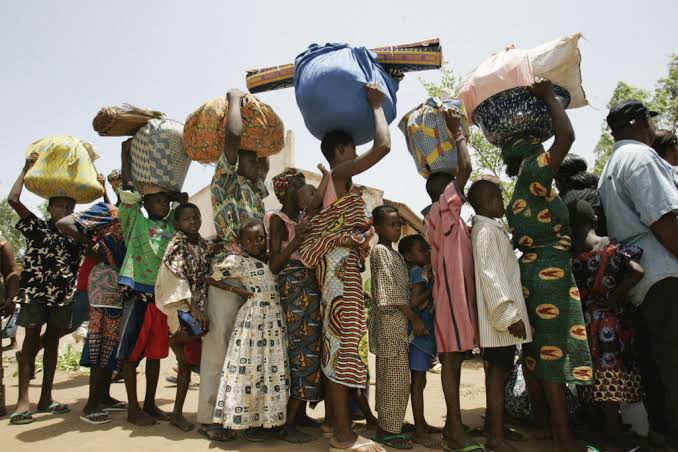
As of September 1, 2026, Nigeria had approximately 3.81 million forcibly displaced people, according to UNHCR. This includes about 3.68 million internally displaced persons (IDPs), alongside refugees and asylum-seekers. These are not merely statistics. Behind every number is a human story: a family forced to abandon its home, a farmer separated from his land, a child whose education has been interrupted, a business owner who has lost everything, and an elderly person who may never see the community in which they spent their entire life.
For these people, access to a digital platform is useful. But it does not answer the most important question: what is the government doing to restore the lives they lost?
The Digital Gateway is designed to simplify registration and access to information and support services. It can reduce administrative difficulties and make it easier for displaced people to interact with relevant institutions. However, a digital platform cannot rebuild a destroyed house, restore a farm, reopen a school, repair a community health centre or guarantee that a family can return home without fear of being attacked.
It cannot, by itself, resolve disputes over land, restore livelihoods or provide the security required for people to resume normal life. There is a danger that government may become preoccupied with making displacement easier to manage rather than addressing the circumstances that forced millions of citizens from their homes in the first place.
The objective should not simply be to register displaced people more efficiently. It should be to create the conditions that make displacement unnecessary.
For millions of Nigerians displaced by insurgency, banditry, communal violence and other conflicts, the question of returning home remains critical. What is the government’s plan for communities whose residents have been away for years?
Are there comprehensive assessments of destroyed homes, schools, hospitals, roads, markets and other public infrastructure? Which communities are safe enough for voluntary return? What security arrangements will protect returning families? What financial and material assistance will they receive to rebuild their lives?
These questions deserve clear answers.
Resettlement should not mean transporting people back to communities where there is no security, electricity, healthcare, clean water, education or economic opportunity. Neither should it mean asking people to return to the same conditions that forced them to flee.
A meaningful resettlement programme must be voluntary, safe, dignified and sustainable. Where returning home is not yet possible, government should consider other durable solutions, including voluntary relocation to safer communities and integration into host communities, with access to housing, land, employment and public services.
The government’s response must go beyond individual relief packages. It should focus on rebuilding entire communities. A comprehensive recovery programme should include:
- Housing reconstruction: Support families whose homes have been destroyed through grants, building materials, affordable housing schemes and community-led reconstruction.
- Security guarantees: Restore police and other security presence, strengthen local intelligence and ensure that returning communities are protected against renewed attacks.
- Agricultural recovery: Provide farmers with land access, seeds, fertilisers, equipment, irrigation support and affordable financing to restart production.
- Education: Rebuild damaged schools, provide learning materials and deploy teachers so displaced children can return to education.
- Healthcare: Rehabilitate primary healthcare centres, restore access to essential medicines and provide psychosocial support to people traumatised by conflict.
- Economic opportunities: Create jobs, vocational training, small-business grants and low-interest loans to help families rebuild their incomes.
- Infrastructure: Restore roads, electricity, water supply, markets and other facilities necessary for economic and social life.
- Peacebuilding: Address the underlying disputes and grievances that fuel violence, promote reconciliation and establish mechanisms for resolving conflicts peacefully.
Importantly, host communities must also be included. They often carry the additional burden of accommodating displaced populations and should not be left worse off because they have extended assistance to fellow Nigerians.
It is worth acknowledging that Nigeria and its development partners have not been entirely silent on durable solutions. UNHCR’s 2026–2029 strategy includes voluntary return, sustainable reintegration, local integration and economic self-reliance. The agency has also highlighted community-based investments in livelihoods, vocational training, irrigation and shelter.
The challenge is ensuring that these commitments translate into action at scale.
For example, the World Bank-backed Solutions for the Internally Displaced and Host Communities Project, known as SOLID, provides an opportunity to move beyond emergency assistance towards longer-term recovery.
But Nigerians need to know how these programmes are progressing. How many displaced families have returned voluntarily? How many homes have been reconstructed? How many communities have regained access to schools, healthcare, water and electricity? How many farmers have returned to their farms? How many people have secured sustainable employment?
Government should publish regular, transparent progress reports with targets, timelines, locations and measurable outcomes.
It must also clarify the responsibilities of federal, state and local governments. Displacement is not just a humanitarian issue; it is a national development, security and governance challenge.
There is a place for technology in humanitarian response. Digital registration and improved access to information can help displaced people navigate government and humanitarian services more effectively.
But technology should be an instrument of recovery, not a substitute for it.
The ultimate measure of success should not be how many people have been registered on a platform or how efficiently appointments are managed. It should be how many people have been able to rebuild their lives, return safely to their communities or establish themselves in new ones with dignity and economic independence.
For a farmer, success is being able to cultivate his land again without fear. For a child, it is returning to a functioning school. For a mother, it is raising her children in a safe home. For a community, it is the restoration of peace, livelihoods and the basic infrastructure needed to thrive.
Nigeria must therefore look beyond the Digital Gateway and articulate a clear, adequately funded and time-bound national recovery and durable solutions plan for displaced citizens.