


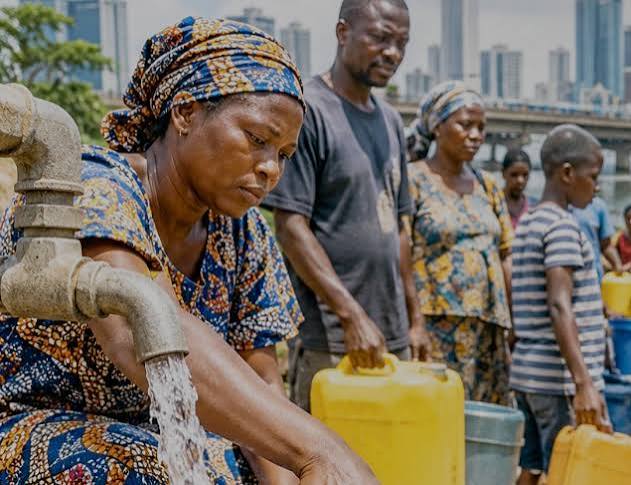
A coalition of civil society organisations, community groups and trade unions has threatened coordinated protests and legal action across Lagos State if the government moves to seal residential boreholes or prosecute households for extracting groundwater without authorisation.

The coalition, operating under the Our Water Our Right Africa Coalition (OWORAC), comprises more than 50 national and regional organisations. It said any attempt by the Lagos State Water Regulatory Commission (LASWARCO) to criminalise domestic boreholes would be resisted through legal action and mass mobilisation across the state’s local government areas.
The warning follows public concerns over a statement attributed to LASWARCO Executive Secretary, Oluwabukola Adeyemo, which reportedly described drilling boreholes and extracting groundwater without government approval as illegal and liable to property sealing and criminal prosecution.
In a statement, the coalition demanded an immediate clarification of the commission’s enforcement plans, arguing that the Lagos State Environmental Management and Protection Law 2017 exempts domestic boreholes from licensing requirements.
The groups specifically cited Section 253(1) of the law, which permits residents to construct wells and boreholes on residential premises for household water supply without obtaining a licence. They also referenced Section 259(2), which requires authorisation for boreholes intended for commercial and industrial purposes.
OWORAC accused the state government of threatening households struggling to access water despite its failure to provide adequate public water infrastructure.
According to the coalition, Lagos Water Corporation records show that the state has only 34,424 registered water connections, representing approximately 1.03 per cent direct coverage in a population estimated at more than 20 million. It argued that more than 91 per cent of residents remain inadequately served by the public water network despite substantial investments in water infrastructure.
The coalition also questioned what it described as unequal regulatory treatment of households and multinational companies, including Nigerian Bottling Company, Guinness Nigeria and FrieslandCampina WAMCO, alleging that the commission had allowed prolonged engagement with industrial operators over compliance issues.
Beyond the regulatory dispute, the groups raised concerns about groundwater contamination in communities such as Baruwa, Iludun and Ajegunle, as well as sewage pollution and saline intrusion in coastal areas.
They urged the government to rehabilitate existing waterworks, prioritise universal access to safe public water and focus stricter enforcement on industrial polluters and commercial operators extracting large volumes of groundwater.
The coalition also opposed plans to privatise the Lagos Water Corporation, insisting that access to water should remain a fundamental public service rather than being driven primarily by commercial interests. OWORAC called on community associations, labour unions, youth organisations, artisans and market groups to remain organised against any attempt to seal residential boreholes.
It warned that any deployment of enforcement teams into communities to demand permits or seal domestic boreholes would trigger coordinated legal action and mass mobilisation across Lagos State.

