
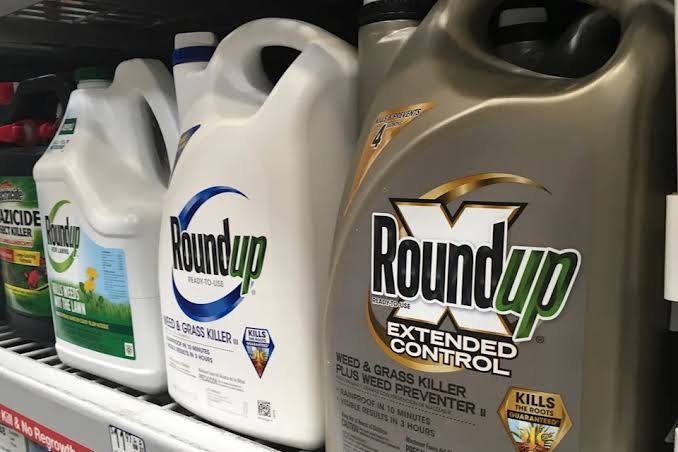
A US judge has approved a $7.25 billion settlement proposed by German pharmaceutical and biotechnology giant Bayer to resolve thousands of lawsuits alleging that its Roundup weedkiller causes cancer. Judge Timothy Boyer of Missouri approved the nationwide settlement on Friday, describing it as “fair, reasonable, and adequate”.

The agreement provides compensation for people who have developed non-Hodgkin lymphoma after using Roundup, as well as individuals who may develop the disease in the future. Under the settlement, Bayer will contribute funds annually over a period of up to 21 years, with total payments potentially reaching $7.25 billion.
Eligible claimants are expected to receive between $10,000 and $165,000, depending on factors including how frequently they used the weedkiller, when they were diagnosed and the severity of their illness.
Christopher Seeger, a court-appointed lawyer representing cancer claimants, said the approval would provide financial relief to victims who had waited more than a decade for compensation.
The settlement comes after years of legal battles that have already cost Bayer approximately $10 billion in payments to resolve Roundup-related claims.
Some lawyers representing claimants had opposed the proposed settlement, arguing that the compensation was inadequate. However, the judge said he was unwilling to further delay payments to people suffering from the disease.
Despite agreeing to the settlement, Bayer maintains that Roundup does not cause cancer and has continued to challenge scientific findings linking its active ingredient, glyphosate, to the disease.
The company inherited the Roundup litigation when it acquired US agricultural chemicals company Monsanto in 2018.
Roundup was originally developed by Monsanto in the 1970s, with glyphosate serving as its primary active ingredient.
In 2015, the International Agency for Research on Cancer (IARC), an arm of the World Health Organization, classified glyphosate as “probably carcinogenic to humans”.
However, Bayer and several regulatory authorities, including the US Environmental Protection Agency, have disputed the classification.
The scientific disagreement has remained central to the litigation, with thousands of users filing lawsuits in state and federal courts across the United States, alleging that exposure to Roundup caused them to develop non-Hodgkin lymphoma.
The latest settlement follows a significant legal development in June, when the US Supreme Court ruled in Bayer’s favour in a separate Roundup cancer case.
In a 7-2 decision, the court overturned a $1.25 million award to a Missouri man who alleged that exposure to Roundup and its glyphosate ingredient caused his non-Hodgkin lymphoma. The court held that Bayer could not be held liable under state-law failure-to-warn claims because federal regulations did not require the company to include a cancer warning on the product’s label.
The ruling provided Bayer with an important legal defence against some of the claims brought by Roundup users. Nevertheless, the company continues to face substantial litigation risks stemming from the thousands of cancer-related lawsuits filed against it.
The $7.25 billion settlement represents another major effort to contain the financial and legal fallout from the Roundup controversy, even as Bayer maintains its position that the weedkiller is safe when used as directed.