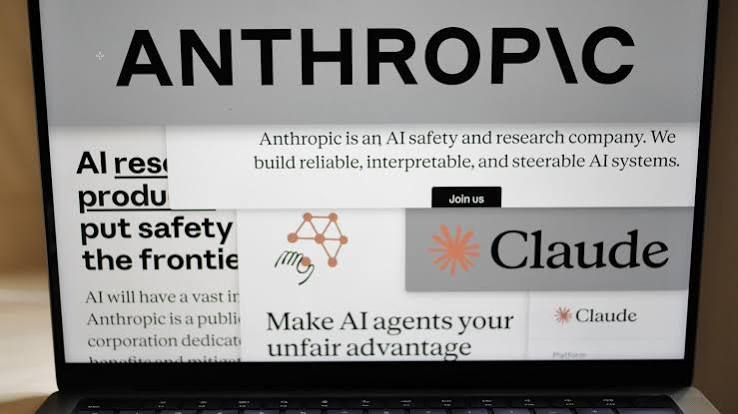
An Anthropic employee and mathematician, Levent Alpöge, has claimed to have used the company’s artificial intelligence chatbot, Claude, to develop a proof of the Riemann hypothesis, one of the most famous and challenging unsolved problems in mathematics. Alpöge disclosed the breakthrough on Friday, saying he spent approximately six weeks working with a non-public version of Claude to produce a detailed mathematical proof.

If independently verified, the proof would represent one of the most significant breakthroughs in the history of mathematics, potentially resolving a problem that has remained unanswered for nearly 170 years. The Riemann hypothesis, named after German mathematician Bernhard Riemann, concerns the distribution of prime numbers, which are fundamental to number theory and have far-reaching applications across mathematics and computer science.
The hypothesis proposes a precise relationship governing the distribution of prime numbers through the locations of zeros of the Riemann zeta function. Its solution could have profound implications for several areas of mathematical research.
Alpöge said he contacted Anthropic Chief Executive Officer Dario Amodei on Sunday to discuss how to make the discovery public.
He acknowledged that the timing of the announcement, coming shortly after Anthropic’s stock market debut, could attract scepticism. “The precise timing is horrible,” he said, adding that he would have completed the work earlier if possible.
He also dismissed suggestions that the announcement was timed to benefit the company, insisting that his decision was driven by his conviction that the discovery should not be delayed further. The proposed proof, written in Lean, a formal programming language used to verify mathematical arguments, runs to more than 250,000 pages.
However, the claim has yet to receive independent mathematical verification. Prominent mathematician Terence Tao said the process of examining the proof would take time, although the presence of a human author who could explain the work would help with the verification process.
The claim adds to a growing list of efforts by artificial intelligence companies to demonstrate that their models can tackle mathematical problems that have challenged researchers for decades.
In September, OpenAI announced that researchers using a non-public version of its AI tools had made progress on a difficult problem involving the Navier-Stokes equations, which describe the movement of fluids.
The company said its system made the breakthrough in just 88 hours, using more than 10,000 AI agents working with varying degrees of autonomy.
However, the resulting proof has also faced scrutiny, with members of the academic mathematics community questioning the validity of some AI-generated mathematical claims and the way such breakthroughs are presented.
Anthropic has similarly highlighted Claude’s capabilities in advanced mathematics and physics, including research involving the formalisation of Fermat’s Last Theorem and investigations into black hole physics.
The growing trend has, however, generated debate among mathematicians about the implications of AI-generated research and the need for rigorous independent verification.
In an open letter, a group of mathematics scholars warned that technology companies’ use of major mathematical claims to demonstrate the capabilities of commercial AI products could be detrimental to the discipline.
They argued that the growing reliance on AI raises broader concerns about intellectual work and the relationship between technological advancement and scientific integrity. OpenAI subsequently announced what it described as solutions, proofs or significant progress on 372 additional outstanding mathematical problems.
While these developments highlight the growing ability of AI systems to assist with advanced mathematical research, experts say the claims must withstand rigorous scrutiny before they can be accepted as established scientific breakthroughs.
For now, Alpöge’s claimed solution to the Riemann hypothesis remains unverified. Its eventual acceptance or rejection could become an important test of how far artificial intelligence has advanced in solving some of humanity’s most difficult intellectual challenges.