
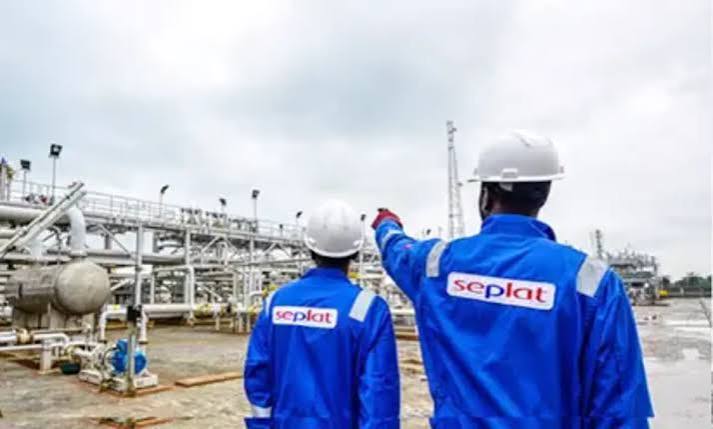
Seplat Energy Plc has reported significant gains from its deployment of artificial intelligence (AI), with oilfield reservoir permeability prediction accuracy rising from between 50 and 60 per cent to at least 80 per cent. The improvement is strengthening the company’s ability to make better-informed exploration and production decisions, according to Engr. Effiong Okon, its Chief Executive Officer.

Okon disclosed this while delivering the keynote address at the inaugural Digitalisation and AI in Energy West Africa Conference in Lagos, where he urged African energy companies to accelerate the adoption of digital technologies. He said AI could transform operational efficiency, improve asset performance and strengthen decision-making across the oil and gas industry.
Okon described the relationship between energy and artificial intelligence as mutually reinforcing, arguing that the expansion of data centres and digital infrastructure would increase demand for reliable electricity while creating opportunities for Nigeria’s natural gas industry. “The relationship between energy and AI is a two-way relationship. There is no AI without energy, and as data centres and other digital infrastructure expand, the demand for reliable power will continue to grow.
“At the same time, AI gives the energy industry an opportunity to find more, decide faster and deliver sooner. For Nigeria, our gas resources will be important to powering that digital future,” he said.
The Seplat CEO identified machine learning, seismic reprocessing and improved subsurface imaging as technologies that could reduce uncertainty in oil exploration and field development. He also disclosed plans to deploy ocean bottom node seismic acquisition technology to improve subsurface understanding and support more informed operational decisions.
However, Okon cautioned that digital transformation should not be reduced to the acquisition of new technologies. He stressed the importance of identifying specific business challenges, establishing reliable data foundations and securing employee participation.
“The point is never the tool. It is the decision it changes. Digital is not a destination. Better uptime, safer operations, sharper reservoir decisions and faster production decisions are the destination,” he said.
He added that AI should strengthen, rather than replace, the professional judgement of engineers. “We must start with the problem we are trying to solve, build the right data foundations and bring our people along. AI should support engineers and strengthen their judgement, not replace the engineering discipline required to operate our assets safely and efficiently,” Okon said.
The company has also deployed Microsoft 365 Copilot to improve staff productivity and established an AI Ethics, Risk and Compliance Committee to guide the responsible use of artificial intelligence.
Also speaking at the conference, David Osemwegie, Seplat’s General Manager, Information Technology, outlined the organisational and technical requirements for integrating AI into business operations.
During a dialogue session titled ‘Operator Address: What It Actually Took to Put AI into Production’, Osemwegie discussed the integration of the company’s former ExxonMobil shallow-water asset. He said the process required consolidating data, strengthening governance, managing different technical systems and addressing inefficiencies associated with legacy infrastructure.
Osemwegie emphasised that business ownership was critical to ensuring AI investments delivered measurable results. He explained that asset leaders must take responsibility for outcomes, while designated business product owners oversee the development, performance and adoption of individual solutions.
He also disclosed that Seplat requires employees to complete basic activation training before receiving Microsoft Copilot licences, a strategy that has resulted in consistent adoption rates above 90 per cent.
Other industry leaders at the conference highlighted the need to connect digital investments to measurable business outcomes. They identified digital twins, predictive maintenance and condition monitoring as important tools for improving equipment reliability, reducing unplanned downtime, strengthening asset integrity and extending the operational life of oil and gas facilities.
The discussions reinforced the growing importance of digital technologies in improving productivity, managing operational risks and enhancing the competitiveness of energy businesses across West Africa.