


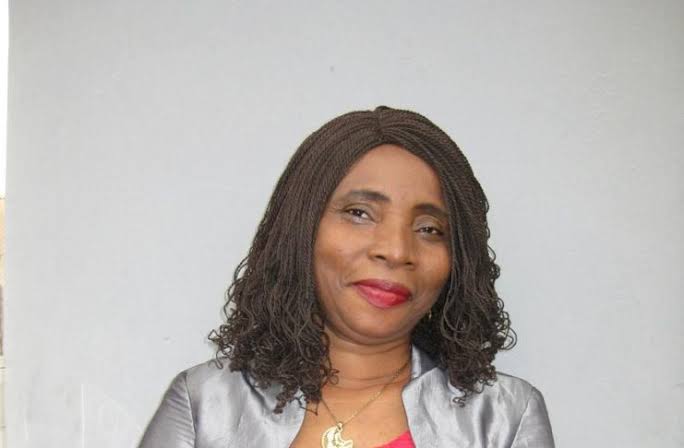
By Eniola Mayowa fnipr
One of the fundamental principles of public relations is that confidence is not a substitute for preparation. This becomes particularly important when a spokesperson is invited to defend government policies, explain public programmes or represent an organisation on live television.
The recent appearance of Alwan Hassan, an APC Presidential Campaign Council member, on Channels Television’s Politics Today, hosted by Seun Okinbaloye, offers an interesting case study for communication and public relations professionals.
During the November 10, 2026 interview, Hassan cited Nigeria’s 112 emergency number as an achievement of the Tinubu administration and challenged the presenter to dial the number live. Unfortunately, repeated attempts failed to connect, creating an uncomfortable moment for the spokesperson and raising questions about the reliability and nationwide accessibility of the service. Subsequent reporting indicated that the number connected in Lagos, highlighting the possibility of inconsistent service rather than establishing that it was universally non-functional.
The issue, however, goes beyond whether 112 works. It raises a more important professional question. Why would a spokesperson invite a live demonstration of a public service without first establishing that it could reliably withstand such a test?
There is a similar Nigerian example worth recalling. In March 2026, presidential spokesman Daniel Bwala’s interview with Mehdi Hasan on Al Jazeera’s Head to Head generated considerable debate. His subsequent description of the interview as an ambush also attracted professional criticism, particularly concerning the importance of anticipating difficult questions and preparing for scrutiny. The two incidents are different, but both illustrate the unpredictable demands of high-stakes media engagements.
These experiences reinforce some enduring lessons for public relations practitioners.
First, media appearances must be treated as professional assignments, not opportunities for spontaneous display of confidence. A spokesperson must understand the subject, verify facts, examine possible weaknesses in the organisation’s position and anticipate difficult questions.
Second, message discipline is essential. The objective of an interview should not be to win an argument against the presenter. It should be to communicate accurate information, address public concerns and preserve credibility. When an assertion is challenged, the spokesperson should respond with evidence, composure and transparency rather than defensiveness.
Third, organisations must invest in media training and proper briefing. A spokesperson should understand not only what to say but also what not to say, when to provide clarification and when to acknowledge that further verification is necessary.
Finally, public relations is not merely about defending a government, an organisation or promoting its achievements. It is about building and sustaining relationships through credible, responsible and consistent communication. Sometimes, admitting that a service has operational limitations is more valuable than insisting that everything works perfectly.
The reported restriction of authorised APC campaign spokespersons to three officials following the Hassan controversy further highlights the importance of coordinated institutional communication, although the council did not explicitly attribute its restructuring to that interview.
For communication professionals, the lesson is clear. Never confuse the ability to speak with the ability to communicate effectively. Confidence may get you through the studio doors, but preparation, evidence, emotional intelligence and professional judgement determine how you leave the studio and how the public remembers your appearance.
In an era when a television interview can become a viral social media clip within minutes, preparation is no longer optional. It is an essential responsibility of every professional entrusted with an organisation’s voice and reputation.
Eniola Mayowa fnipr is a Lagos-based Communication Strategist & Reputation Architect. Managing Partner @ StepCraft Communication


