
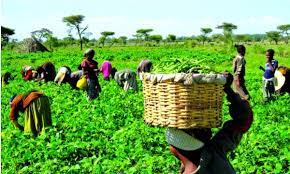
Nigeria loses between 45 per cent and 50 per cent of its agricultural produce annually to post-harvest losses, largely due to inadequate storage facilities, poor transportation networks and insufficient processing infrastructure, Segun Alabi, Managing Director of Davidola Farms, has said.

Alabi warned that the country’s agricultural potential would remain largely untapped unless greater investment was directed towards processing, storage and other critical infrastructure rather than focusing predominantly on primary production.
He made the remarks at a news conference in Abuja to mark the 10th anniversary of Davidola Farms, where he highlighted how post-harvest losses undermine farmers’ incomes, limit job creation and weaken Nigeria’s capacity to earn foreign exchange from agricultural exports.
According to him, the scale of food wastage represents a significant economic loss for a country seeking to strengthen food security and diversify its economy.
“The problem of Nigeria today is not an issue of primary production, but the issue of infrastructure. Every year, we lose between 45 and 50 per cent of what we produce per annum,” he said.
Using pineapple production as an example, Alabi estimated that Nigeria produces approximately 1.6 million tonnes annually, warning that losing nearly half of that output represents an enormous waste of agricultural resources and investment.
He argued that improving storage, transportation and processing facilities would enable farmers to preserve their harvests, supply factories consistently and access wider markets.
He added that food security would remain difficult to achieve if Nigeria continued to lose a substantial proportion of the food it already produces.
Highlighting his company’s response to the challenges, Alabi said Davidola Farms was pursuing an integrated pineapple value-chain development strategy designed to maximise the economic value of the fruit.
The plan includes producing pineapple concentrate, canned pineapple and freeze-dried products, alongside bromelain, an industrially useful enzyme extracted from pineapple.
The company also plans to convert processing waste into renewable energy as part of its ambition to establish a zero-waste production system.
Alabi disclosed that Davidola Farms was developing an outgrower partnership programme to bring more farmers into its supply chain, providing them with technical assistance, dependable markets and opportunities to expand production.
He said the strategy would strengthen farmers’ participation in the agricultural value chain while ensuring a consistent supply of raw materials for processing.