


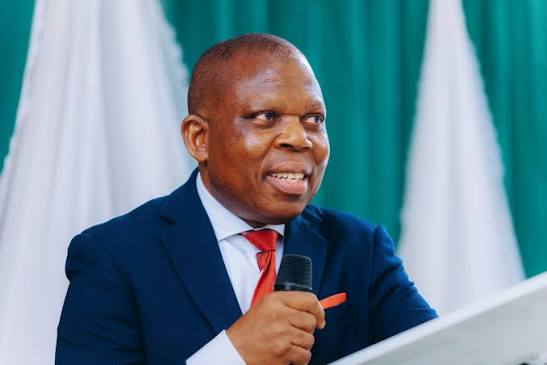
By Tim Akano

Why 2027 must not become one crisis too many
Picture a house on fire in a neighbourhood where every fire engine is already out on another call. The neighbours are busy saving their own roofs. The hydrants are dry. Nobody is coming.
That is Nigeria’s position as we approach 16 January 2027.
The World Has No Spare Extinguishers
Look at the map. Russia’s war on Ukraine grinds on. Syria has not settled and Yemen has not healed, and Houthi missiles now reach airports in Saudi Arabia. Iran sits at the centre of a tense region, Lebanon is under fire, Iraq is still hurting and Sudan bleeds. The powers that once mediated, funded or policed other people’s emergencies are stretched across pockets of war and rivalry. Their attention, money and patience are spoken for.
If Nigeria, the most populous nation in Africa, slides into post-election chaos, there will be no rescue, only statements of concern. A crisis in Nigeria would not be one crisis among many. It would be one too many, for us, for a West Africa already strained from the Sahel to the Lake Chad basin, and for a world with no capacity left to absorb it.
An Idea, Not Yet A Concept
In 1897, the journalist Flora Shaw popularised a name for the territories along the Niger. In 1914, Lord Lugard amalgamated the Northern and Southern Protectorates. The peoples who would live inside the new unit were not at the table.
An idea is a thought that exists. A concept is an idea that has been processed, tested, structured and agreed, with a purpose, a framework and a destination. America, Israel, the UAE, Switzerland, India and Japan, among others, are concepts. They sat down, argued, wrote the terms and signed them.
Nigeria is a body that is still waiting for its soul and spirit.
The Road, Not Just The Drivers*M
Every four or eight years we change the drivers, and we blame each one for the ghastly accidents.
Soldiers and civilians, northerners and southerners, Muslims and Christians have all taken the wheel. Parties have rotated. Uniforms have come and gone. The road keeps throwing every driver off at the same bends.
When different drivers crash at the same corner, examine the road. Leadership matters, and so does the structure inside which leaders operate. Ours concentrates security, revenue and patronage at one centre. There is a single national police force. The federal government takes the largest share of the Federation Account, over half under the standing formula. That makes the presidency a prize too large to lose.
When the prize is that large, losing feels like extinction. When losing feels like extinction, democracy turns dangerous.
The Law Of Three Decades
Nations transform through stability, unity of purpose and vision, sustained for roughly thirty years. China began reform in 1978. South Korea, Japan and the UAE each held one direction for a generation.
In 66 years, Nigeria has never strung together a generation of settled direction. We have had coups, a civil war, religious and ethnic violence, and now banditry and insurgency. A nation that resets its ambitions every four years is not building. It is rehearsing.
Thirty unbroken years of stability cannot be built on a structure that keeps producing the same contradictions. We cannot fulfil our destiny the way we are presently arranged.
The Blueprint Nobody Signed
The 1999 Constitution begins with the words “We the People.” It was issued under military rule. No nationality ratified it and no referendum approved it. A house built on someone else’s blueprint will always feel rented, and much of our national tension is the sound of tenants asking to become owners.
Even modest reforms crawl. If the mildest rebalancing of power struggles to pass, patching clause by clause will not save us. The bridge needs builders, not a repair kit.
The One Egg
There is only one egg, and the three major ethnic groups are all struggling to capture it on 16 January 2027. The fear that it will break in the struggle is real, and Nigeria has seen it break before. After the 2011 presidential election, violence in the North killed about 800 people in three days, according to Human Rights Watch.
Why is the tension so high? Because ours is a winner-takes-all system. The president controls the security forces and the biggest budget in the land. He can enthrone the next richest man in Africa, and he can dethrone him. When one office holds that much power, every election feels like war.
The only way out is decentralisation.
The First Order Of Business: 29 May 2027
Whoever is sworn in on 29 May must treat one item as the first agenda of the presidency, ahead of every other project:
Convene a Conference of Ethnic Nationalities within 100 days of inauguration, with delegates chosen directly by their peoples.
Give it three months, not three years, to produce a new constitution.
Submit that constitution to the people in a national referendum.
Include a lawful, negotiated clause allowing any nationality that chooses to opt out to do so peacefully.
That last clause will frighten many, so let me answer the fear. A union people cannot leave is a union held by command. A union they can leave, and choose to stay in, is a union held by consent. Quebec and Scotland were given ballots, and Czechoslovakia separated peacefully in 1993. Yugoslavia was given none and ended in war. The clause is not an invitation to leave. It is the strongest possible reason to stay.
The 2014 National Conference gathered nearly 500 delegates and its report was shelved. The lesson is not that conferences fail. It is that conferences without binding force, a fixed timetable and a referendum fail. Ours must have all three.
Prevention Is Better Than Cure
The danger window is now, between the campaigns and the count.
I therefore call on the international community, the African Union, ECOWAS, the United Nations and Nigeria’s friends, to establish a Peace and Reconciliation Committee for Nigeria ahead of the 2027 presidential election. Let it work alongside our own National Peace Committee, which has brokered candidate accords before. Let it earn the trust of every region, and let it hold every candidate, party and institution to account for the peace.
Kenya paid for its lesson in 2008, when a disputed result left more than a thousand people dead before international mediation restored order. Côte d’Ivoire paid even more in 2010–11, when a disputed election plunged the country into conflict that killed about three thousand. Prevention costs a fraction of that, in money, in lives and in lost decades.
The Verdict
Restructuring is not a breakup. It means a thinner, stronger centre handling defence, currency and foreign affairs, while regions manage policing, resources, power, education and local growth. It means moving from a nation that distributes allocations to one that produces wealth.
We fear the fragile bridge will collapse if we step on it with restructuring. But a bridge that carries no traffic is not safe, only unused. Every stable nation now standing crossed its restructuring bridge trembling, and found a country on the other side.
The world cannot put out our fire, and the fire brigade is not coming. So we must do what no one else can do for us: write the country before the ballot box breaks it.
Let us build a house that does not burn.
Restructuring is not a nice-to-have. It is how an idea becomes a nation.
If this speaks to you, send it to ten leaders, thinkers and citizens who care about the architecture of our future. Let the conversation begin before the ballot box decides for us.
Tim Akano is a Technopreneur, Geopolitical Analyst and Public Intellectual who writes from Lagos. Founder, New Horizons Africa Group; Out-of-school/Almajiri/Vulnerable children-to-Tech Foundation; and Tim Akano Foundation.

