A $50 million intervention by the African Export-Import Bank (Afreximbank) helped revive the Aba Integrated Power Project in Abia State after years of delays caused by policy inconsistencies, bureaucratic bottlenecks and financial constraints, according to Geometric Power Group.

Mrs Agatha Nnaji, Group Managing Director of Geometric Power, disclosed this during a recent media tour of the company’s facilities in Aba, organised as part of Afreximbank’s Season 2 Impact Stories site visits.
Geometric Power operates Geometric Power Aba Limited (GPAL), which handles power generation, and Aba Power Limited Electric (APLE), the distribution company serving the area.
Nnaji said the project had endured a prolonged period of uncertainty, during which the company continued to maintain its facilities and pay staff salaries despite the suspension of major project activities.
She said the company spent seven years sustaining the facilities while navigating bureaucratic delays and other challenges that prevented the project from becoming fully operational.
According to her, Afreximbank’s $50 million intervention helped address the immediate funding and technical constraints that had stalled progress.
“We had staff that had to be paid to continue to maintain it. But at the end of the day, when we now came up with the actual amount that we needed to complete, Afreximbank came to the rescue,” Nnaji said.
She added that the bank supported the project because it recognised its potential impact on businesses and residents in the area.
“Afreximbank came because they saw the vision. They understood the impact it would have on the people who were going to serve,” she said.
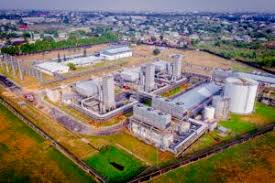
Nnaji disclosed that the power plant has an installed generation capacity of 141 megawatts from three turbines. A fourth turbine could raise capacity to 188MW, while the gas pipeline supplying the facility was designed to support generation of up to 500MW in the area.
She described the Aba Integrated Power Project as a model for addressing Nigeria’s electricity challenges, arguing that private-sector investment could deliver more reliable and affordable power when projects are properly structured and executed.
“We believe it’s a model that is workable, that would enable people to get power at an affordable level, provided that it is done right by whoever the sponsors are,” she said.
Nnaji said the company’s experience in Aba demonstrated the possibility of providing a sustainable, round-the-clock electricity supply to support economic and social development.
She explained that Geometric Power’s goal was to provide electricity that enables businesses and communities to grow economically, socially and environmentally.
“Geometric Power is evidence that private-led investment in the power sector can succeed,” she said.
The project highlights the role development finance institutions can play in supporting capital-intensive infrastructure, particularly where financing gaps and implementation challenges have delayed projects with potential benefits for local industry and economic activity.