


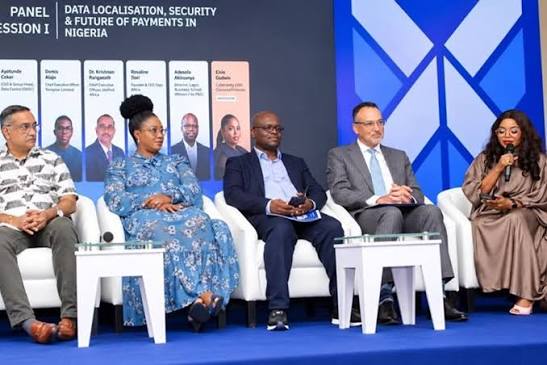
Technology experts have said Nigeria’s push for digital sovereignty must go beyond keeping data within the country, stressing the need for local control, technical capacity, cybersecurity, privacy and the freedom to choose global technology partners.

The experts spoke during a panel session titled “Data Localisation, Security & Future of Payments in Nigeria” at the inaugural GrowthX by Techeconomy conference in Lagos.
The discussion focused on how Nigeria can localise critical data without compromising the security, resilience and performance of digital services.
Dr Krishnan Ranganath, Chief Executive Officer of UniCloud Africa, said digital sovereignty should not be defined merely by the physical location of servers.
According to him, genuine digital sovereignty rests on three key pillars: control, capability and choice. “Digital sovereignty shouldn’t just mean having your data stored on a server, either in Vegas or Abuja,” Ranganath said.
He explained that Nigeria and its institutions must have the ability to determine how critical digital infrastructure is controlled and managed.
“First and foremost, sovereignty should be under control. Nigeria and Nigerian institutions should be able to decide how they control their own infrastructure,” he said.
Ranganath identified local technical expertise as another critical component, warning that infrastructure without the capacity to manage it would amount to “sovereignty on paper.”
“Secondly, I talk about capability. Sovereignty without skill is what I call sovereignty on paper,” he said.
He added that Nigeria must also retain the freedom to determine which international technology providers and partners it works with.
“The internet is a global space. Nigerians should also be able to decide which global partners we want to work with. It shouldn’t be that it is being forced on you and you have no other options,” he said.
Ranganath noted that Nigeria was making progress through the expansion of local data centres, Internet Exchange Points and government policies aimed at strengthening the domestic digital infrastructure ecosystem.
However, he stressed that developing local skills remained essential to reducing dependence on foreign operators for critical infrastructure.
Roseline Ilori, Founder and Chief Executive Officer of Bridge57 Solutions, said data localisation by itself would not eliminate cybersecurity risks.
“Localisation of our data is very important, but the fact that we are localising data does not mean we are also localising cybersecurity,” she said.
Ilori warned that moving data into domestic infrastructure could simply move existing vulnerabilities closer to home if appropriate security controls were not implemented. “If we localise vulnerability, the fact that it is now local does not mean it is no longer there,” she said.
She urged organisations to maintain robust security measures, including multi-factor authentication, effective access management and compliance with internationally recognised security standards.
Ilori also raised concerns about privacy, arguing that storing citizens’ data locally should not create unrestricted access for government or other actors.
“Now our data is local, does it mean the government can just request for any data because it is just there? We should not trade that for the privacy of the citizens,” she said.
The panel also examined the role of trust in the development of Nigeria’s local cloud and data-centre ecosystem.
Ranganath said certifications and industry standards could establish minimum requirements, but argued that lasting trust would ultimately depend on consistent performance.
“Trust is earned over time,” he said.
He said data-centre operators and cloud providers must demonstrate reliability, security, uptime and strong connectivity before businesses would be willing to migrate critical workloads to local infrastructure.
For the banking industry, the transition presents both opportunities and operational challenges.
Blessing Ehize, Chief Technology Officer of First City Monument Bank (FCMB), said banks generally viewed data localisation positively but needed clarity on implementation and sufficient time to adjust their technology architecture.
“I think for the banks it is a good direction. Localisation is always a good thing,” Ehize said.
He noted, however, that many banks had invested heavily in cloud-based infrastructure to deliver scalability, performance and resilience.
“If we are coming back, we need to first understand how we architect for the kind of performance our consumers and customers are looking for. They are not necessarily looking for anything less than what we have. They are asking for more,” he said.
Ehize identified resilience as a major concern, particularly the potential impact of infrastructure outages on customers and financial transactions.
The panelists consequently called for continued collaboration between regulators and industry stakeholders to ensure that localisation does not undermine the reliability, security or efficiency of Nigeria’s digital economy.

