


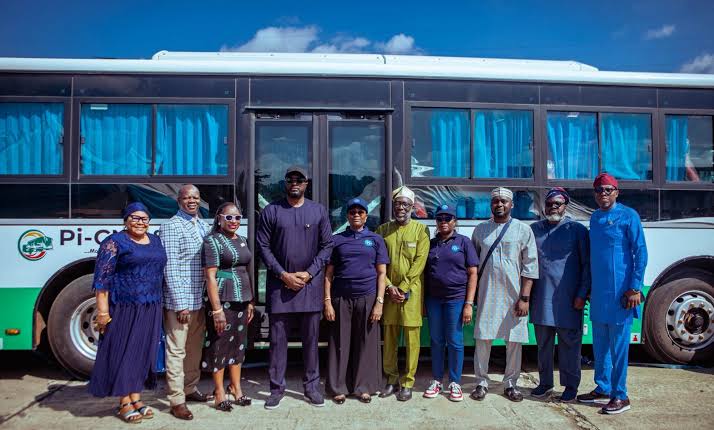
Lagos has received 20 high-capacity Compressed Natural Gas (CNG) buses as the Federal Government intensifies efforts to reduce public transportation costs through the adoption of cheaper and cleaner energy alternatives.

The buses, delivered under the Presidential Initiative on CNG and Electric Vehicles (Pi-CNG & EV), were handed over to the Lagos Metropolitan Area Transport Authority (LAMATA) on Wednesday, September 30, 2026.
The handover took place at LAMATA’s headquarters in Lagos, with IVM and TATA CNG buses among the vehicles presented.
The development comes a day before the Federal Government’s October 1 target for Nigerians to begin seeing measurable reductions in public transport fares through the increased deployment of CNG and electric buses.
Speaking at the handover ceremony, Engr. Abimbola Akinajo, LAMATA Managing Director and Chief Executive Officer, described the delivery as another step towards improving the efficiency, affordability and reliability of public transportation in Lagos.
She said the buses would increase transport capacity, improve connectivity between communities and support economic activities across the state.
Akinajo also urged the beneficiary operators to ensure that the buses are properly deployed and maintained to maximise their operational lifespan.
Oluwaseun Osiyemi, Lagos State Commissioner for Transportation, said the high-capacity buses could move more passengers with fewer vehicles, potentially reducing waiting times on routes where they are deployed.
The Chief Operations Officer of Pi-CNG & EV, Tosin Coker, described Lagos as a critical part of Nigeria’s transition to cleaner energy in public transportation and urged operators to prioritise proper maintenance of the vehicles.
The 20 buses bring the number of CNG buses operating within Lagos’ regulated bus transit system to about 170, according to Akinajo.
She said the additional capacity would be deployed to routes experiencing significant passenger demand, particularly the Ikorodu-TBS corridor.
Lagos began introducing CNG-powered buses into its regulated public transport system in 2024 as part of efforts to reduce dependence on conventional fuels and contain rising transport operating costs.
Akinajo said the lower operating costs associated with CNG and electric buses had helped LAMATA keep fares within the regulated system from rising in line with the sharp increase in diesel prices.
According to her, diesel prices have risen from about N950 per litre at the beginning of 2026 to between N1,950 and N2,100 per litre.
The increase has significantly raised the operating costs of diesel-powered buses. However, the use of CNG and electric buses provides operators with an opportunity to manage those costs without fully transferring the increase to passengers through higher fares.
Lagos’ transport policy also targets a significant increase in the share of clean-energy buses in the state’s Bus Rapid Transit system over the coming decades.

