


By Elvis Eromosele

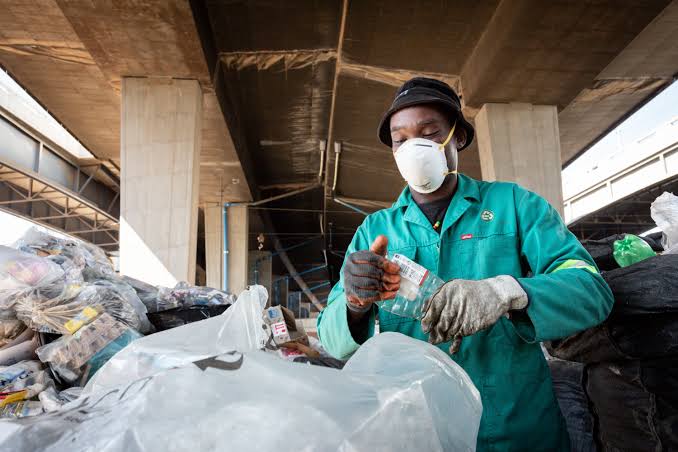
There is a growing number of people, of all ages, picking up plastic from the busy streets of Lagos today. While the need to boost income to cope with rising inflation is a strong factor, a closer look would reveal that these pickers are the first line of defence in the nation’s quest for a sustainable environment.
They are the unsung guardians of Nigeria’s fragile environment. They are the invisible backbone of a recycling chain strained by the nation’s explosive urban growth and mounting waste crisis. They are plastic waste pickers.
The observant would notice that something shifted last year. Clad in crisp uniforms, name tags pinned proudly to their chests, and green lanyards swaying like banners of hope, 100 of these workers gathered for a transformative training session led by Nestlé Nigeria. The first 50 were in Lagos, and then another 50 in Abuja.
The launch of the Safety, Health, and Environment (SHE) Training Program is a bold initiative by the food giant to empower 100 plastic waste workers across Lagos and Abuja. As Nigeria grapples with an annual waste generation of 32 million tons, much of it plastic, Nestlé’s effort stands as a beacon of corporate responsibility. In a country where 90 per cent of plastic waste is mismanaged, this program isn’t mere philanthropy. It’s a strategic investment in people, planet, and a circular economy that could redefine Nigeria’s path to sustainability.
Nigeria’s waste woes are no secret. With a population projected to hit 400 million by 2050, its cities are drowning in refuse. Lagos alone, a megacity of 21 million, produces over 13,000 tons of waste daily, equivalent to filling the Lagos Lagoon with garbage every few months.
The challenges are systemic. Inadequate infrastructure, insufficient funding, and weak enforcement plague waste management. Overflowing dumpsites in markets and residential areas aren’t just eyesores; they’re health hazards, breeding grounds for diseases like cholera and malaria.
Yet, glimmers of resolve are emerging. In 2025, the federal government rolled out the National Policy on Plastic Waste Management, a roadmap to curb generation and pollution while boosting recycling. Lagos State, ever the pioneer, has begun enforcing a ban on single-use plastics, targeting foam containers and thin bags that plague street food culture.
At the heart of this national push lies the circular economy. This is a model where waste becomes a resource, not a burden. But blueprints need builders, and that’s where frontline workers, the waste pickers, come in.
Nestlé Nigeria isn’t new to this fight. Since 2019, the company has diverted over 61,000 tonnes of plastic from landfills through community recycling drives and recycler partnerships. Its water brands, like Nestlé Pure Life, now incorporate 50 per cent recycled polyethylene terephthalate (rPET), sourced from local initiatives, while transparent bottle caps, rolled out in August 2025, make recycling easier by reducing sorting errors. Globally, Nestlé’s pledge to make 100 per cent of packaging recyclable or reusable underscores this ethos. In Nigeria, the firm is supporting the Food Beverage Recycling Alliance (FBRA) and Recyclers Association of Nigeria (RAN) to formalise informal collectors.
The SHE Training Program, implemented by ImpactCrest Consulting, builds on this foundation. Over two days in Lagos and Abuja, participants, a diverse mix of men and women from waste picker cooperatives and recycling firms, examined occupational health basics, safe handling of recyclables, fire prevention, and PPE protocols. Each left with a kit: gloves, masks, boots, and helmets to shield against cuts, chemicals, and collapses.
Victoria Uwadoka, Nestlé Nigeria’s Corporate Communications, Public Affairs, and Sustainability Lead, stated, “At Nestlé, we are committed to building a waste-free future and recognise the crucial role plastic waste workers play in reducing pollution and facilitating a circular economy. This training is a vital component of our support for this key stakeholder group, enhancing Nigeria’s waste management infrastructure.”
She explained that by equipping these essential workers with the necessary skills and knowledge, the firm helps to improve their quality of life while increasing their employability and boosting productivity within a sustainable waste management framework.
The impact rippled beyond the classroom. In Abuja’s opening ceremony, Prof. Innocent Barikor, NESREA’s Director General, lauded the effort as a model for industry-government synergy. “Waste workers are often unrecognised, yet they combat plastic pollution at the coalface,” Barikor said. “Nestlé’s focus on training is commendable, especially amid global plastic challenges.”
In Lagos, Engr. Mayowa Elefin, Managing Director of Maladase Ecopreneur Management Company Limited and a trainee representative, noted, “This isn’t just training; it’s empowerment,” Elefin shared during the closing remarks. “We’ve gained skills to prevent accidents, handle fires, and work more safely. It boosts our productivity and dignity in the recycling chain.”
Nestlé’s program aligns with UNEP’s call for industry to shoulder extended producer responsibility, making companies accountable for product lifecycles. Nigeria is inching toward such regulations, eyeing producer-funded take-back schemes.
This training is another step in the right direction. The SHE graduates left safer, skilled, and seen. Nigeria’s sustainable society isn’t a distant dream; it’s being forged in the hands of those who once carried its burdens alone. With allies like Nestlé, government resolve, and grassroots grit, the nation edges toward a future where waste whispers of wealth, not woe.
The circle, it turns out, is closing, one trained hand at a time.
Eromosele, a corporate communications expert, sustainability advocate, and Lead Coordinator for the Africa Sustainability Forum 2026, writes via elviseroms@gmail.com.

