


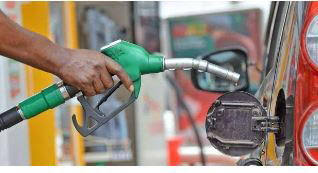
As the soaring cost of petrol continues to squeeze households and businesses across Nigeria, the Centre for the Promotion of Private Enterprise (CPPE) has issued an urgent call for targeted social interventions.
Following a recent price jump from ₦1,300 to ₦1,430 per litre, the policy think tank cautioned that while the cost-of-living crisis is severe, reinstating the universal fuel subsidy is neither economically prudent nor fiscally sustainable.
In a policy brief released by Dr. Muda Yusuf, CPPE Chief Executive Officer, the organisation argued that bringing back the subsidy regime would reverse critical economic reforms and strain public finances. This perspective aligns with recent warnings from the Nigeria Revenue Service (NRS), whose leadership noted that an unchecked subsidy regime could have ballooned to ₦53 trillion, potentially crashing the naira to ₦3,500 per dollar. President Bola Tinubu’s administration has consistently defended the removal as a necessary medicine to avert an economic collapse and restore macroeconomic stability.
Rather than debating a return to subsidies, Yusuf emphasised that public discourse must pivot toward accountability and the effective deployment of reform savings. He stressed that citizens must see tangible dividends from the policy through optimised public services and infrastructure.
The CPPE outlined a multi-sector blueprint requiring immediate collaboration across all tiers of government:
-
Mass Transit and Energy: Expand affordable public transportation, rail freight, and logistics networks to slash commuting and shipping expenses. Concurrently, accelerate the adoption of Compressed Natural Gas (CNG) and decentralised solar energy to break reliance on expensive petrol.
-
Protecting MSMEs: Implement policy adjustments that lower operating, energy, and financing hurdles for micro, small, and medium-sized enterprises to keep domestic production alive.
-
Tackling Food Inflation: Channel investments into irrigation systems, rural infrastructure, and agricultural supply chains to bolster domestic food security.
-
Fiscal Transparency: Require federal, state, and local governments to openly demonstrate how extra revenues generated from the subsidy removal are measurably improving citizens’ welfare and structural competitiveness.
“The appropriate policy direction is to preserve the downstream petroleum reforms while aggressively mitigating their social and economic costs,” Yusuf stated, noting that converting reform savings into lasting structural advantages is the only way to make the transition socially defensible.


