


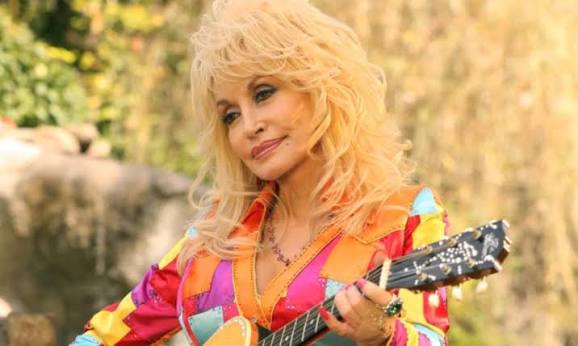
There are some artists whose music entertains us, and there are others whose lives become part of the music they create. Dolly Parton belongs firmly in the second category. Her extraordinary career has been built not only on a remarkable voice and an unmistakable songwriting gift, but also on a life story shaped by poverty, faith, family, resilience and an enduring belief in the dignity of ordinary people.

Few songs capture that story more powerfully than “Coat of Many Colours.”
Released in 1971, the song draws from Parton’s childhood in rural Tennessee and tells the story of a coat her mother made for her from pieces of fabric. To a child growing up with very little, the coat could easily have been a source of embarrassment. Instead, Parton transformed it into a symbol of love.
The coat may not have been expensive. It may not have looked like the clothes worn by children from wealthier families. But, as the song makes clear, it was stitched together with something money could not buy: a mother’s love.
That is the genius of Dolly Parton. She has repeatedly taken the seemingly ordinary experiences of working-class life and given them extraordinary emotional power.
“Coat of Many Colours” is not really a song about clothing. It is about how love can make scarcity feel like abundance. It is about a mother who gives what she has, a child who learns the value of that gift, and a woman looking back decades later and recognising that some of life’s greatest treasures cannot be measured by price.
The song also reveals an important thread running through Parton’s life: faith.
Raised in a large family in the Smoky Mountains of Tennessee, Parton grew up surrounded by country music and Christian influences. Gospel music was not simply a genre she encountered later in life; it was part of the musical and spiritual environment that shaped her from childhood.
Her music would eventually travel far beyond the small churches and communities of her upbringing. She became a country superstar, a pop crossover success, an actress, songwriter, businesswoman and philanthropist. Yet the spiritual foundation of her childhood never disappeared.
Indeed, as her career developed, Parton increasingly returned to gospel music, exploring the themes of faith, grace, hope, redemption and gratitude that had been present in her upbringing.
Her gospel recordings have offered a different window into the artist behind the celebrity. In these songs, the rhinestones, the fame and the spectacle often fall away, leaving the singer and her message.
Parton’s gospel music is significant because it demonstrates that her faith was not merely a decorative part of her public image. It has been woven into her understanding of life and music.
Whether singing about a childhood coat, a struggling family, heartbreak, dreams or faith, Parton has consistently found ways to connect the personal with the universal.
That may explain why her music has travelled so far beyond country music.
A listener does not have to have grown up in Tennessee to understand “Coat of Many Colours.” You do not have to have lived in poverty to understand the shame that can come from not having what others have. You do not have to be a parent to understand the love contained in a handmade gift. And you do not have to share Parton’s religious convictions to recognise the sincerity of her gospel music.
Her greatest gift may be her ability to make deeply personal experiences feel like shared human experiences.
There is also something profoundly moving about the fact that a woman who rose from one of America’s poorest rural communities eventually became one of the world’s most recognisable entertainers, without completely abandoning the values that shaped her early life.
Dolly Parton’s story is often told as a story of success. But perhaps it is better understood as a story of transformation.
The little girl in the homemade coat became a songwriter who could write for millions. The young woman who arrived in Nashville with dreams became a global icon. The daughter of a poor family became a philanthropist who has invested heavily in literacy and education. The country singer became a cultural institution.
And through it all, she continued to sing.
Her gospel music adds another dimension to that journey. Gospel allowed Parton to revisit the spiritual language of her childhood while bringing her own experiences, maturity and distinctive voice to it. Songs about God’s grace, perseverance and hope sit naturally alongside the stories of hardship and triumph that have defined her catalogue.
There is something fitting about that.
The same woman who once sang about a coat made from scraps has spent much of her career reminding us that greatness does not always begin with abundance. Sometimes it begins with very little: a loving family, a song, a dream, a belief and the courage to keep going.
Dolly Parton’s legacy therefore cannot be measured simply by records sold, awards won or songs written. Her deeper legacy is the way she has made people feel.
She has made poverty less shameful, motherhood more sacred, perseverance more beautiful and faith more accessible through music.
“Coat of Many Colours” remains perhaps the perfect metaphor for her life. It is a coat made from different pieces, just as Parton’s own story has been stitched together from family, hardship, humour, ambition, music, faith and compassion.
None of the pieces would tell the whole story on their own.
Together, they form something magnificent.
Dolly Parton may have started life with very little material wealth, but she inherited something far more valuable: a rich musical tradition, a strong sense of family and a faith that taught her to see worth beyond appearances.
She turned those gifts into songs.
And in doing so, she gave generations of listeners something even greater than entertainment.
She gave them a way to see beauty in humble beginnings.
She gave them permission to be proud of where they came from.
She reminded us that love can be sewn into a simple piece of cloth, that faith can survive hardship, and that a voice born in the mountains can eventually reach the whole world.
That is the enduring magic of Dolly Parton.
A coat of many colours.
A life stitched with many stories.
A voice that carried them all.
And, perhaps most beautifully, a song that reminds us that the things made with love are often the things worth keeping forever

