


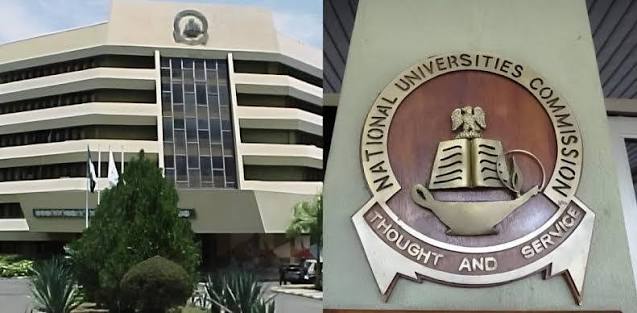
The Federal Government has approved the establishment of 33 new universities across the country, raising the total number of licensed universities in Nigeria to 309.

The newly approved institutions comprise seven federal universities, six state-owned universities and 20 private universities, in what marks one of the largest single expansions of Nigeria’s higher education system in recent years.
The seven new federal universities are the Federal University of Environment and Technology, Tai, Rivers State; Federal University of Applied Sciences, Kachia, Kaduna State; Tai Solarin Federal University of Education, Ijagun, Ogun State; Federal University of Agriculture and Developmental Studies, Iragbiji, Osun State; Federal University of Technology and Environmental Studies, Iyin-Ekiti, Ekiti State; Federal University of Agriculture and Technology, Okeho, Oyo State; and the Federal University of Health Science and Technology, Tsafe, Zamfara State.
The six new state universities are Abdulsalam Abubakar University of Agriculture and Climate Action, Mokwa, Niger State; Ebonyi State University of ICT, Science and Technology, Oferekpe, Ebonyi State; University of Aeronautics and Aerospace Engineering, Ezza, Ebonyi State; Benue State University of Agriculture, Science and Technology, Ihugh; Cross River University of Education and Entrepreneurship, Akamkpa, Cross River State; and the University of Innovation, Science and Technology, Omuma, Imo State.
The government also approved 20 private universities. They include Omega University (Delta State), Regnum Medical University (Lagos State), Transatlantic University of Medicine and Health Sciences (Anambra State), City University (Ogun State), University of Fortune (Ondo State), Eranova University (Federal Capital Territory), Minaret University (Osun State), Abdulrasaq Abubakar Toyin University (Kwara State), Southern Atlantic University (Akwa Ibom State), Lens University (Kwara State), Monarch University (Ogun State), Tonnie Iredia University of Communication (Edo State), Isaac Balami University of Aeronautics and Management (Lagos State), Kevin Eze University (Enugu State), Bridget University (Imo State), Leadership University (Abuja), Jimoh Babalola University (Kwara State), Greenland University, JEFAP University (Niger State), Azione Verde University (Imo State) and Unique Open University (Lagos State).
The latest approvals underscore the government’s drive to expand access to tertiary education as demand for university admission continues to grow. Every year, more than one million candidates seek admission into Nigerian universities through the Unified Tertiary Matriculation Examination (UTME), but available spaces remain insufficient to accommodate all qualified applicants.
The expansion also reflects the growing role of private investors in Nigeria’s higher education sector. Over the past decade, private universities have accounted for a significant share of newly licensed institutions, helping to ease pressure on public universities. However, their relatively high tuition fees have continued to limit access for many prospective students.
Education stakeholders have welcomed efforts to increase admission capacity but have repeatedly stressed that expanding the number of universities must be accompanied by adequate funding, modern infrastructure, qualified academic staff, robust research support and strong regulatory oversight to ensure quality education.
The approvals also align with the Federal Government’s efforts to strengthen specialised education in critical sectors such as science, technology, engineering, agriculture, environmental studies and healthcare, areas considered essential for Nigeria’s economic growth and industrial development.
With the addition of the 33 new institutions, Nigeria now has 309 licensed universities, reinforcing its position as one of Africa’s largest higher education systems. The challenge, analysts say, will be ensuring that growth in numbers is matched by improvements in quality, funding and graduate employability.
The latest approvals continue Nigeria’s rapid expansion of higher education institutions as demand for university admission continues to outstrip available spaces. Each year, more than one million candidates sit for the Unified Tertiary Matriculation Examination (UTME), but only a fraction secure admission into universities due to limited capacity.
Private universities have accounted for the bulk of new approvals in recent years, reflecting increased investment by individuals, religious organisations and corporate bodies in tertiary education. However, higher tuition fees at many private institutions mean they remain beyond the reach of many Nigerian families.
While the establishment of more universities is expected to improve access to higher education, education experts have consistently argued that expanding the number of institutions must be matched with adequate funding, qualified academic staff, modern infrastructure, research support and effective regulation to maintain educational standards.

